MAIGRET DELAYED
A Locked Room Mystery

CHAPTER ONE
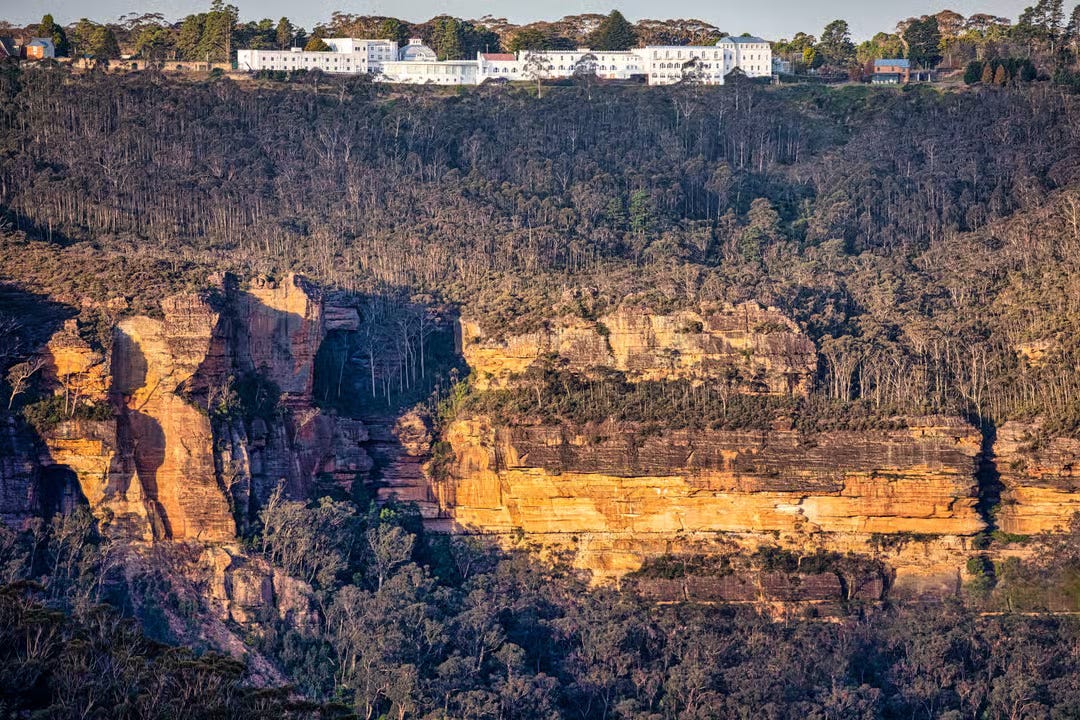
“What do you make of this famous old French detective they’ve brought to Australia? Was it to find out how Harold Holt died? What’s the word in Labor circles?”
“I wouldn’t know, Sir Keith. Apparently he’s still in the country, in Sydney – the Frenchman, not Holt – stuck here because of the airport strike. I hope you don’t think I had anything to do with that. The strike, I mean. Not Holt.”
“I don’t blame you for anything, Mr Macken, and I’m not interested in attacking your party without reason. Give me a reason, and that’s another matter. Look, you people may think my late father and I have been too political all these years – and in the wrong way for you – but I’ve been doing my job, that’s all. Make my job hard and I make your job harder: that’s the Ducker way…What’s your drink?”
“Just whatever you’re having, Sir Keith.”
Sir Keith Ducker turned round from the silver drink trolley and his face wore that full-lipped smirk which was as threatening as anybody else’s scowl.
“You’re my guest, Mr Macken. You can have what you have, you know.”
“Well…scotch I guess. As it comes.”
“Right, scotch it is…And I might join you in one.”
He poured two drinks into hefty cut glass which was the old Brilliant preferred by his grandfather, who thought anything Edwardian and after showed the roots of modern flimsiness.
“There you go, Mr. Macken…Or can I call you Pat?”
“Pat. For sure. They all call me Pat.”
“And you can call me…Sir Keith. Like they all do.”
His grin broadened, till the face atop that massive frame was of an amused predator cat. His guest, suitably dominated, gave a suitable chuckle.
Sir Keith lowered himself into a venerable armchair which was bigger than the others in the study. The murky green leather showed wear, as was the intention. It was the wear of four generations of Duckers making money, each more than his predecessor.
“As I was saying, Pat, I’m political because I have to be to survive. But I also feel I’m helping this country survive. Can you look me in the eye and tell me we’d be in better shape if the likes of Evatt had been running the show since the war? We wouldn’t be in Vietnam. We’d be bloody Vietnam, right? It’s okay, I know you can’t answer.”
“No, I don’t mind saying that Menzies might have got even my vote over Evatt. Don’t know about Gorton…But you have to remember the Party was never really Evatt’s. Anyway, that’s Federal Labor, and I’m a state member. New South Wales is my concern, and yours too, I think…”
“Before you go on, I just want to make a point of order, Pat. Do you mind?”
“N…no, of course not.”
“You just said there was something I have to remember. I’ve sacked blokes for phrasing like that.”
“Phrasing…like…?”
“What you have to remember is that I never have to do anything. If people could tell me what to do there wouldn’t be much point in being a Ducker, would there?”
The voice had not been raised, it was even slightly softer, but the grin had flattened out. The point was taken.
“Now, you were saying that we’re both interested in the future of New South Wales?”
“Well, of course. If we win government we’re not interested in turning the clock back. Our union base has to recognise that choking the goose is no way to get any eggs in the long term. And, frankly, I don’t see why every major new enterprise has to go south to the Vics. And now South Australia. What’s wrong with doing the big things in the premier state? Hang out the New South Wales shingle, that’s what I say.”
“You’re dead right. Why does everyone feel it’s safer to marry the ugly sister?…Premier state. I like the sound of that, Pat. You can put it on number plates if you win government. Of course, you have to win government first.”
“Yes, well…we’ll be doing our best. We have a great new leader in Paul. He’s been a knockabout from Redfern, background like most of us, but he’s also got that appeal to youth, thinking types, the middle ground. No silver spoon like a lot of these law school socialists, but you look at Paul and you don’t see the Old Guard either. You see someone who looks like he’s stepped out of a boardroom and might be heading off to the opera. Other times he looks ready to pull on a jumper to play lock for South Sydney.”
“No need to oversell the bloke, Pat. I’ve actually met him at the opera, and, unlike me, he didn’t have the excuse of being dragged there by his missus. Anyway…I like the look of the man, but I won’t be bothering him. If he enjoys a good drop like they say he can always come round and help me polish off a case of ’53 Margaux. Happy to know him, and even talk a bit of business…but I’m more interested in a key minister in any new government he forms.”
Pat Macken shifted in his chair, said nothing.
“A key minister in a new, can-do government…and you can call it Labor, for all I care. Someone who knows the unions and knows how to keep them sweet with developments that are good for for them, and good for the New South Wales public. Someone who sees the other side. No more red-raggers – but also no more micks with chips on their shoulders. Excuse the reference to Catholics, Pat, but I think you know what I mean. This is the 1960s and it’s time to bury a lot of old baggage. I’m not against anybody’s rosary beads, but I don’t want them shoved down my throat.”
“Couldn’t agree more.”
“Here’s the thing, Pat. My family got into publishing and stayed in publishing because a long time ago we worked out that if millions of people can read they will want to exploit that ability. Go back a century or two and such wasn’t the case. At first the general public couldn’t read; then, when they could, they were told to just read the Bible at night, which they did. Then they realised they could read all kinds of stuff. Language was language, print was print. Then someone invented better lamps, then electric lights, and people realised they could sit up late reading all sorts of stuff – appealing, easy stuff – instead of just having naughties in the dark with the same old body lying next to them. Then someone invented ways to put photos, lots of photos, into periodicals….then colour photos…You following me?”
“I think so.”
“Pat, this is the age of the masses, no thanks to Marx or Doc Bloody Evatt, but thanks to hungry buggers like me making stuff for the masses. There’s another hungry bugger called Ludwig who’s buying up whole forests in Brazil so he can make money selling newsprint to blokes like me who’ll make money selling Rugby League Month and Women’s Journal to any punter with two bob to spare. I mean, one day there may not be any phone booths because people will be getting about with walkie-talkies; but there’ll never come a time when they don’t need paper to print on and read off. So if it takes a forest, we’ll grow forests. There’s the Ducker secret: sell as much as possible to as many as possible, and never price yourself away from the working man…
“So who’s more Labor here? You or me?
“The age of the masses! We’re there. Think about it, Pat. The working man is the main customer because what he lacks in income he more than makes up in numbers. Now sheilas aren’t getting married till their mid-twenties – some even later – and they’ve got a few bob to spare. Seems crazy, but it’s the reality. Thousands of young unmarried women with their own money. Should we pretend they’re not there?
“What do you reckon, Pat? Haven’t we got a lot in common?”
“I’d say…we do, Sir Keith. It’s just that we’ve been coming from different angles, maybe.”
Sir Keith sat back and stared into his drink before taking a slow, satisfied sip, to allow his guest to digest what had been said and worry about what it was leading to. Nice or nasty, Duckers never allow too much comfort.
“Now, Pat, you and I are nodding acquaintances from the track. I’ve also seen you at a certain illegal casino, where we refrained from nodding. I gather you like a bet and some fun?”
“I…yes, I do. I…”
“No explanation needed, Pat. You and I and millions of people in this state of convicts and weekend-seekers want to live a certain way. Just like our forebears. Doesn’t mean we don’t want to work and go places, make an honest quid. We just want to be able to clock off in our own way. Isn’t that about it?”
“I’d say so.”
“Yet we have to wait on-course for a horse-race, or queue up in something like a post office, or maybe buy an Opera House lottery ticket, if we want to gamble and stay legal. The whole legal system is there to make us seem what we’re not: puritan Pommie serfs. The sports-loving working man of New South Wales has to creep around like a dog about to be beaten if he wants a flutter. Fortunes are made which never see the light of taxation. Old Perc Mallia has to buy out entire lotteries to wash all his bookmaking money. We hate bloody wowsers – yet we live under these bloody wowser laws we’re not game to touch because we’re frightened to be ourselves.
“It’s not just the flutter, either. Sydney’s an old port city where people have been buying and selling sex forever. But all we offer openly by way of sex in publishing is a sheila in a bikini on page three, or maybe Tania Verstak wearing a one-piece. In entertainment, there’s one tiny strip where everyone’s supposed to go to get a look – and then only the looking is legal. Why can’t a working man go to a working lady, Pat, to satisfy two needs at once – legally! And why don’t governments get their take from it all? Someone gets to do the taxing, but the public sees none of it. Why not fund a new expressway with the rooting by American servicemen up on the Cross?
“Now, I’m not proposing open slather, but look at all the poofs, in Sydney especially. Most of them just working men who want to get on with their lives, not interested in touching up kids, just other blokes. Why, I’ve even heard things about your new leader. Maybe it’s just because he dresses well…”
Was this a threat? Pat Macken was too quick with a response.
“I can assure you, Sir Keith…”
“Let me assure you, Pat, that I couldn’t give a tick’s dick what Paul Furst’s preferences are in that regard. I want to propose certain things for the future of this state, that’s all. Do you think you could come along with me, if those proposals were sound and meant more money for the New South Wales government?”
“Well, I…I’d have to know what proposals…”
“Casino.”
The other’s mouth dropped open a little.
“Yes, a casino, Pat. Legal and huge and world standard and world famous. Right here in NSW.”
Pat Macken was silent, his brain was not.
“Well, Pat?”
“Er, Sir Keith…it’s visionary, of course. But…”
“I’ll say all the buts for you, okay? The wowsers will hate it, and the underworld will hate it. And maybe young Murdoch will decide he hates it just because I’m a Ducker and he’s just a bloody Murdoch.”
“Sir Keith, when you try to do this sort of thing…even if you handle the local influences, which is not easy…there are people in America who are experts at moving in, then taking over. If you legislate them out of ownership they’ll manage to own every business and supplier connected with the enterprise, control every union…”
“Pat, do you think I’m just hatched? I said the casino would be legal, I didn’t say all my partners and associates would be altar boys. Nobody who really matters will be kept out of the action, and some of them are just aching for a legal front.”
“But the Yanks…”
“Pat, Sir Andrew Adele can come to satisfactory arrangements with overseas interests, and you can help him, I’m sure. I’m talking about something enormous, something that will be able to give suck through a lot of very big tits. Imagine Monte Carlo, and then some. You think Adele would be interested if it wasn’t so? Nobody fries bigger fish than Sir Andrew - except me.”
Silence for a long, thoughtful moment.
“Sir Keith…it’s just that Sydney is so jammed in, and there are so many small establishments operating to meet the needs…the recreational needs of…”
“Who’s talking about bloody Sydney? If planners want to put giant broken eggshells right on the harbour to make a business loss, then call the flaming thing an Opera House, let ’em. We don’t want to hang off the harbour like a sore thumb and shock the wowsers waiting for ferries at the Quay. If people want to go to cheap city dives for a flutter on the tables, they can keep doing it, and the dives can go on making money. In fact, my plan is to grow their market, give people a taste. A little bird tells me you’re mates with George Snoweiss. Well, if you are, you can go and tell George his businesses around the Cross and Darlo won’t die but grow under my plan. My supermarket will be a long way from his little boutiques…
“Pat, I’m talking about a superb heritage building on a superb site with endless development room. It’s days off being acquired by the right…transitional syndicate, so to speak. There’ll be massive extensions and remodelling, but under my plan Sans Souci will be preserved forever.”
“Sans Souci! The Blue Mountains!”
“That’s right, Pat. Just a couple of hours or less from Sydney, and a million miles from care. But instead of decaying guest houses you’ll have the greatest casino in the world, where a working man can come with his family because there are safe and wholesome amusements all around. Cec Corkery’s Reptile Park, the Namatjira Gallery, the Museum of Aboriginal Relics…those things are there already. Golf and tennis coming out of your ears, of course. Plans for a world’s biggest putt-putt that’ll be every kid’s dream. Along with all the classic bushwalks and pony rides, the waterfalls, which were the main reason people started going to the Blueys last century…
“But if a billionaire flies in from overseas, there’ll be first class facilities for him, and a high stakes compound the equal of anything in the world…
“I’m not talking about a gaudy strip in the middle of nowhere like Vegas where there’s nothing worth looking at past all the lights, but a slice of Aussie heritage overlooking the Megalong Valley. The breathtaking Megalong Valley. And all it will take is the help of a can-do government which can only benefit from doing what should have been done a long time ago…
“What do you reckon, Patrick Macken, Member for Druitt and Shadow Minister for Works?”
“I…I’d have to think, consult with others.”
“But not too long, I hope.”
“No. In fact…this is making sense. I mean, without your plan Sans Souci will just be a liability for the state and whoever owns it. Nobody can make money with it; nobody can afford to fix it just for use as a guest house again; nobody wants to pull it down just to exploit the liquor licence…I doubt anybody would be allowed to pull down such a huge and famous old building…
“It’d be like shooting Skippy, wouldn’t it, Pat?…Say, it’s a drizzly day and you look about the right size for this spare raincoat.”
Without getting up from his chair, Sir Keith picked up a folded raincoat and tossed it to his guest.
“Oh, I think I’ll be fine just getting to my car.”
“No, please. Do me the favour of trying it on, at least. It was left here by an actual duke, a mate through polo, who died last month. Maybe he should have kept it on…”
“Really, I couldn’t…”
“Stand up and try it on. It’s an Aquascutum, one of their fancier types. Apparently it’s the same model as Cary Grant wore in that movie. Why waste it if it fits? Won’t fit a brontosaurus like me, that’s for sure. Go ahead, just try it on.”
Pat Macken did as he was asked. The coat was, in fact, a perfect fit, and Pat seemed quite smug as he smoothed it down.
“I told you so. A perfect fit.”
“Um, there’s a bundle or package in this pocket, Sir Keith.”
“Is there? Probably an old bag of jelly beans or something. Please don’t dispose of it here. Look at it later. There’s already too much clutter in this smelly den of mine. But you don’t look like the Member for Druitt in that coat. More like Humphrey Bogart, or a young version of that French detective, the one who’s stranded in Sydney by the airport strike…
“A bientôt, Monsieur Macken!”
CHAPTER TWO
“To make the evening perfect we should have invited that old French detective.”
“Can’t. He’s back in France by now.”
“No he isn’t. He’s stuck in Sydney because of the airport strike. Along with Shirley Bassey.”
“If only we’d known!”
“Not sure he’d have come. Pretty old.”
“I didn’t know he was a real person. I thought he was invented by that author, Simone.”
“Simenon, you mean. That’s what a lot of people thought. I read where they asked him – Maigret, that is – how he felt about being mistaken for a character in novels. He just said: ‘I’m real. But are you sure Simenon exists?'”
“That’s so French.”
“How is it French?”
“Oh, you know…Exist…Existentialism…”
“They don’t all sit around in cafes smoking Gauloise cigarettes having discussions about existing…”
“So what was he doing in Australia?”
“Investigating Harold Holt’s death, they say. At least, he went to Portsea and Cheviot Beach…So putting one and one together…”
“Nah, just a publicity stunt. You find those Maigret books all over Europe but they don’t seem to sell as much here and in the US. You’ll see. Angus & Robertson and Dymocks will have whole racks of Maigret mysteries on show in the next few weeks. It’s the system.”
“Oh, no! Not the system! Duck, hippies!”
For this one night, Sans Souci was its old self – provided the lights were kept dim and imaginations sharp. A fire of mountain ash and stringy bark logs had been roaring then glowing in the gargantuan fireplace with its Deco sculpturing; through the panorama window, guests had once again watched the winter sun set over a cloudless Megalong Valley; and again the huge lounge was filled with aromas of eucalyptus smoke, tobacco smoke, brilliantine, cologne and perfume. The guests were small in number, but judging by their formal attire and excited mood the date might not be 1968 but 1928: the year regarded as the peak of the Sans Souci heyday, the year of the two duchesses, the year a reduced D’Oyly Carte company performed the Mikado in front of both the Governor-General and Governor…
“Look, shouldn’t we get the evening underway before Sans Souci crumbles and falls around our ears?”
There was an awkward silence after this last remark from one of the tipsier guests. Eyes did a quick shift to check the reaction of Naomi Berger.
The lady, fortunately, was in one of her elevated moods. While the middle-aged features were etched and strained by the years of sanatoriums, drugs and experimental treatments, not even a careless reference to her greatest love – decrepit Sans Souci – could darken Naomi’s expression on this special evening.
“Don’t worry, Sans Souci will be standing when the Harbour Bridge is scrap…Now, shall we get on with Body in the Gallery?”
“Naomi, it’s going to be great fun…but medication first, okay?”
Lowering her voice with the reference to medication, Brenda Berger caressed her sister’s lank hair and gave her an entreating stare.
“Oh, not tonight. Those tablets make my mouth dry. What I really need is a brisk Cinzano.”
“Naomi, it might be okay…just the one Cinzano…but you have to…you know…”
“Oh, for God’s sake, Bren, later…just not tonight!”
“But it’s not like aspirin. It’s like…a mineral salt or vitamin. You know…you have to keep up a certain serum level. It’s been such a great party, and about to get better. Don’t let’s argue about it in front of everybody, because I really do have to insist…”
“All right, all right…but only if I can still have my Cinzano!”
“Maybe…What does Doctor Pereira think?”
The man addressed, a very dark Ceylonese with tweed jacket, Dunhill pipe and David Niven moustache, moved closer to the two women.
“What do I think about what?”
“If Naomi takes her medication can she have maybe one Cinzano?”
“I wouldn’t inflict red vermouth on any living creature. Maybe a Pimms…”
“No, seriously, Winston! If I can’t have one, then no tablets either!”
“Ladies, I’m not Naomi’s physician. I’m just a friend, here for an evening of Body in the Library…or Gallery, in this case.”
“You can give an opinion off the record. You have some idea, I think, of Naomi’s condition. You know most of the tablets she has to take…”
“Well, look here, there are members of my profession who are starting to condemn even good pipe tobacco. It’s hard to know what’s in another doctor’s mind…But if you ask me, one drink now won’t hurt. And maybe even one more much later. Why not? Just don’t quote me.”
The two women excused themselves from the rest of the company and went into a kitchenette off the disused bar. Soon they came back and Naomi Berger eagerly poured herself a Cinzano, over ice which had been brought up in a bucket from the still functioning lower kitchens.
“Now, while you have your drink, give us a few clues about your impending murder.”
“Out of the question, Winston. Listen to me, everybody! The clues will all be physical, starting in the gallery. Secret till then. I’m giving the well-respected Doctor Winston Pereira the key to lock me in for a full ten minutes…”
“Isn’t that a bit risky…after drinking…”
“Oh, ease up Brenda. I’m alone when I sleep at night, aren’t I? Ten minutes to get the clues ready and make myself a corpse is hardly going to kill me. Well, I intend to be dead…but you know what I mean.”
Naomi finished her drink with relish, then clapped loudly.
“Everybody! Your attention please! Come closer for a moment…
“Thank you all for coming, all you friends of the Berger family and Berger-Kent Music Publishing, friends of Sans Souci. And thank you for being attired in the way…the only way people should be attired of an evening. If that puts me in the wrong decade or even century, so be it!
“The clock has been turned back for tonight, but, rest assured, Sans Souci has a future as well as a past. Plans are underway with government, financial institutions and private investors to secure that future, which will be a future like our past, one of elegance, refined leisure and civilised entertainment.
“I have been missing from the helm due to private difficulties some of you know about. But I am back.”
Light applause and cheers, with some glasses raised.
“Tonight, the southern winter solstice, we are staging one of our favourite events. Tonight we again play Body in the Library, though we long ago renamed it Body in the Gallery because, as most of you know, our gallery is right over there to my right, behind that one large door, while our library requires a bit of a wander through corridors.
“The game is much the same as that played annually at the northern winter solstice in the famed St Albans guest house in Wiltshire, whom we thank for the inspiration and whom we have long regarded as a sister institution in what I am not ashamed to call the Mother Country.
“The rules of the game are simple and time-honoured. One member of the assembled company is to lie dead in the library after leaving numerous clues, not all straightforward, as to the identity of the killer. In the local tradition, you keep your own identities, since Sans Souci guests have tended to know each other well and new guests of the right sort are quickly and warmly included. In this age of the Beatles there may be rush and anonymity beyond these grounds, but within these grounds…never!
“You will notice that I alone am dressed without proper tone this evening. That’s because I am to be tonight’s body and being a body can be a messy affair. Hence my slacks and skivvy. Mind you, I make a good bohemian, as the old denizens of Sydney now defunct Bongo Lounge will attest. However, the rumour that I once voted Labor in those early wandering years are exaggerated. What are you laughing at, Alderman Collins?
“Now, please be aware – especially you ladies in heels – that the magnificent oak parquetry of the gallery has been erupting and is awaiting restoration, like much else in Sans Souci. So watch your step, please!
“If you have any further questions…I refuse to answer them! You must find the clues and use them to find the murderer and motive. I am about to step inside that door, the door will be locked by our family solicitor, Mr Walter Marley, who will then pass the key to Doctor Winston Pereira, who will be in charge of unlocking. Both are responsible for the only iron rules of the game: no peeking, and no leaving the lounge for any reason! I will be given exactly ten minutes, timed by my adored friend and fellow snob, Miss Cynthia Hobbes-Talbot, to arrange the crime scene and my demise.
“In former times we had an orchestra to dramatise things as little. Till we again have a weekend orchestra for Sans Souci, it will be helpful if you use your imaginations. Oh, and an extra rule for tonight…
“Nobody is allowed to ring Sydney and the Menzies Hotel to consult with any visiting French detectives! C’est entendu?
“Walter, I now present you with the only other key to the gallery beside the one retained by my sister as gallery curator…
“Please lock the door behind me.”
As Naomi stepped toward the closed door her sister rushed to her side, squeezed an arm, and whispered:
“You were magnificent. So confident. You really are back with us.”
“Only the beginning, Bren. I am back. And Sans Souci will be back.”
Naomi Berger entered the gallery, which was immediately locked behind her by old Mr Walter Marley, of Marley, Marley and Crabbe Solicitors.
CHAPTER THREE
“So, what do we do while waiting?”
“One more round of drinks, but just one.”
“Brenda, your sister is sounding her old self.”
“I was just about to say the same thing, Brenda. A real transformation. The old Naomi is back.”
“And very much in charge, it would seem.”
“Thanks, everyone. Things really are looking up. The treatments seem to be working as hoped. But I know she’d hate to be talked about this way…you know…as a patient or victim. Let’s just get those drinks…”
“Is it permitted to listen at the door. Well, Winston?”
“Strictly forbidden by Wiltshire rules for Body in the Library. Naomi is allowed ten minutes of full privacy to arrange the crime. She’s had all day to prepare clues outside the room, but she only gets the ten minutes within…”
“How do we know she hasn’t been in the gallery already today, fixing things up?”
“Proprietor’s privilege, nothing to do with me. I am only a humble and dusky physician from tropical climes, and my office is to hold on to this key and watch that nobody approaches that door till the ten minutes are up…Brenda, why are you looking so grave?”
“Winston, did you have to encourage her to drink? And even take another later?”
“Would I have got far by arguing? Any further than I can get by arguing with you now? We all know even these mountains bow low to the Berger ladies.”
“I just wish…Oh, never mind. Let’s get drinks. Everybody! We have Great Western, Reschs, Pimms at the bar. No spirits till after the game. And, before you ask, that is also a Wiltshire rule. It seems an old vicar at St Albans broke his leg on a staircase following clues once. Sounds like a story, but there really was a vicar playing Body in the Library. And please do watch the parquetry in the gallery, especially if you have heels.”
*
The angular and athletic Miss Cynthia Hobbes-Talbot – Tally to friends – had done nothing but peer at the Blancpain Fifty Fathoms watch which she was a bit too smug about owning.
At last she raised a fist in the air and, still with her eyes on the dial, began to count down, raising one finger after another. The crowd chanted along.
“Five…four…three…two…One! Open! Open up! Winston!”
With a smirk and an air of mock authority, Winston Pereira approached the gallery as he jangled a hefty key ring. The others milled behind him.
He unlocked and opened the door.
The first thing they all saw was Naomi Berger, sprawled face down on the floor, a puddle of dark liquid near her head. The scene she had set was much more than any had expected. Immediately, her sister, after a gasp, pushed past Winston Pereira, muttering “too much, this is too much…”.
“This has gone far enough. Naomi, so please get up! Tell her, Winston! You’re a doctor, aren’t you? This can’t be healthy. Naomi, the point’s made, the joke’s been had. But please, this is too much…for me, in any case. The rest of you please stay back. Don’t encourage her…
“Naomi, we can have our game without all this…disturbing stuff. Tell her, Winston…Naomi, please get up…”
The obvious fury of Brenda caused the others to stay back and silent.
“Please, for me, Naomi…just get up and clean up.”
Her sister did not move.
“Naomi, I’m not criticising…But do this for me. You know I worry about you. It’s all I’ve done lately. This is no joke for me…It might be a joke for you and the others…Naomi…”
As her voice trailed off she moved closer to her sister.
“Na…Naomi?”
Being careful of any fake blood, she crouched and inspected her still unmoving sister. Next she took hold of a wrist, as if to feel for a pulse.
“Winston! Winston! What’s wrong with her? Why isn’t she…?”
The doctor moved forward, waving at the others to stay back.
He crouched down and felt the wrist then the bloodied neck of the woman who still had not moved.
“I…I’m afraid…I don’t see how, but…Mr Marley, could you please assist Brenda away from here?”
“No! I’m not leaving my sister! What is it? Why is she not moving? Did something or someone cut…No! She can’t be…You have to look harder, Winston!”
“I will, Brenda, I will…but I need you to move away…Everyone back, please, except Mr Marley.”
The elderly lawyer moved forward and looked in bewilderment at his client’s unmoving body in the puddle of what they had all assumed was fake blood. Then he drew Brenda up by an arm and led her gently toward the door.
The doctor placed a hand below Naomi’s jaw without changing her position. The hand and sleeve he raised were soaked in red. He turned to the others and shook his head.
“I’m afraid…I’m afraid she’s gone. There a deep cut across…across the throat. Somehow…her throat’s been cut!”
“But how?”
“I don’t know, Brenda…Surely she wouldn’t…She seemed so well…”
Winston Pereira beckoned to the local alderman, who was also the local pharmacist.
“Mr Collins, there must be a knife or blade. There’s nothing in her hands. Best we look under the body without changing its position. As I lift, I need you to look. Don’t stain yourself. I’ll handle the side where there’s blood.”
The two men performed the operation with great care, lifting one end of the body, then the other.
“There’s nothing, doctor. No blade.”
“Then how…or who…Unless…Quick, check the windows, Mr Collins…Could you help him, Tally? But touch nothing!”
Alderman Collins and Miss Hobbes-Talbot began to patrol all the windows in the gallery.
“These are locked, and the bars are all in place…”
“No, this one has no bars and the window isn’t locked.”
“What? Are you sure, Tally?”
Miss Hobbes-Talbot was standing by a window which looked west into the valley.
“Yes, and there’s a high ladder right up against it. Shall I check…?”
“No, touch nothing. But someone has obviously taken the trouble to close it again from outside so as not to draw our attention to it. Brenda, did you know there were no bars on that window?”
Still slumped against the family lawyer, she managed to reflect between sobs:
“The bars were unbolted and removed, just for a few days…We’ve had to fix the lintel…it was rotten. The ladder is ours. Roland, our maintenance man, must have left it there overnight…But why did you let her take the drink, Winston?”
“Brenda, one Cinzano had nothing to do with it. You sister has been…well, obviously she’s been murdered. Murdered by someone who must have entered and escaped through that window…”
“The Guerard! It’s missing!”
Miss Hobbes-Talbot was pointing to a small rectangular area on the wall where a painting had obviously hung for a long time.
“That’s what they were after: the Guerard! Somehow they knew the gallery was unsecured at this window, noticed the ladder and bars missing. Naomi must have surprised them…But why didn’t she scream?”
Brenda Berger whined as Mr Marley was trying to draw her out of the room.
“If she hadn’t drunk the Cinzano she might have been able to scream, defend herself…something…”
Winston Pereira raised himself up, blood on his knees, blood all over his hands and arms. He was trembling in apparent helplessness.
“Just ring the police…I’ll wait by her…But get the police.”
“Who are you to give orders here? You’re not in Ceylon with your servants now. If you had just been responsible enough to give one sensible order to Naomi…”
“But, Brenda, how could I control her? She could have been drinking all day for all we know.”
“She might have listened to you, if not to me. Instead you let her walk in here alone and half drunk…”
“All right, all right. But please go with Mr Marley for now…Nobody touch anything. Everybody out. Mr Collins, could you arrange to get me some towels?…Please, take everyone away, Mr Marley. Nobody needs to look at this, nobody must touch anything. I’ll wait here till the police come, but please fetch me towels for all this…this blood. It’s on my shoes as well…Perhaps if you could close the door behind you…or just leave it ajar…Nobody should have to see this.”
*
Minutes later, it was Mr Marley returned with the towels, having left his client in the care of the pharmacist. He found Winston Pereira still standing by the body, hands outstretched to keep from smearing more blood on his clothing. The normally confident, even cocky, Ceylonese had the expression of a baffled child.
“I…I could do nothing for her. She was my friend, both sisters were good friends to me. I couldn’t argue with Brenda in her state…but there was nothing I could do to control her sister. I’m not a psychiatrist. I’m simply caught in the middle, Mr Marley.”
“I think we all understand. So will Brenda when she’s over the shock. We need to put the blame on whoever did this, nobody else. If the criminal was surprised he’s probably left a trail behind him in his panic. The painting won’t be easy to dispose of profitably. We’ll track down whoever did this…Dr Pereira, when you’ve got your hands and legs wiped down, would you like me to stay by the body so you can clean up?”
“Do you mind? I feel awful standing here with Naomi’s blood all over me.”
“No, I don’t mind. Go and freshen up. The police will be here soon.”
Pereira threw a bloodied towel flat on the floor and wiped his shoes hard on it till it stopped transferring.
“Thank you, Mr Marley. So much blood…I shouldn’t be surprised, as a doctor…but there’s just so much of it.”
“Was it at least quick for her?”
“Yes, I’d say instantaneous. That’s one good thing. The only good thing.”
*
Brenda, Mr Marley and Winston Pereira sat facing the young man who looked both too young and too small to be a policeman, let alone a detective.
“As I think I mentioned on arriving, my name is Clive McGroder. I’m from the Western District detectives. I’m sorry I was so late in coming after the local police, but I live some distance away…”
“McGroder? Son of the late Arch McGroder?”
“Yes, Mr Marley, my father was Chief Inspector McGroder. I’m sure you would have known him.”
“Knew him well. Fine man.”
“Thank you, Mr Marley. I’m the runt of his litter, so the physical resemblance isn’t strong…Now, there are a few matters I’d like to raise with the three of you while my men interview the other guests and the one or two staff who were around today. Well, it’s just the one matter for the moment, since it’s such a puzzling one.
“Dr Pereira, you say there was no weapon, no blade, near the body?”
“As far as I could tell.”
“Well, we’ve now been able to inspect more closely and there was, in fact, no cutting implement of any sort on or near the lady’s body. There was no sort of ring or key or piece of jewelry which could have inflicted the wound…”
“Well, obviously the thief took the blade with him.”
“In fact, we don’t see how.”
“But it’s obvious…”
“Miss Berger, you mentioned to the local police that your handyman, Roland Cassin, had been working on a new lintel for the window, and that was why the bars and mesh had been removed? The work required him to get access to the outside of the window by means of a very high ladder?”
Brenda nodded weakly.
“The reason for the sturdy bars and mesh, as well as the heavy entry door to the gallery, is the value of the paintings and books kept there?”
“Yes. Especially the von Guerard, the work that was stolen. I don’t see why it’s a puzzle…”
“Miss Berger, would you describe your handyman, Roland Cassin, as a careful, conscientious type?”
“Till now I would.”
“Honest?”
“Till now…I would have said so.”
“From my brief contact with him by telephone tonight I got the same impression…”
Pereira cut in:
“Where is this taking us? Nobody has accused Roland or anybody…”
“Dr Pereira, the thief, the killer…if there was such a person…”
“Of course there was!”
“Let me finish please, Mr Marley. I was saying that, if there was such a person, he could not have entered or left the gallery through that window.
“You see, on Friday afternoon, before knocking off work, the careful and thorough Mr Cassin, aware of the need for security and without having to be asked, neatly drilled into the window frame at two inconspicuous points and screwed it shut. He then took the ladder back to the workshed. There is no sign of interference with the screws, and anybody wanting to screw them back in place, even roughly, after removing them would need tools, time, and a powerful light…and would not be escaping the scene of a murder in darkness and in panic.
“Which means nobody could have entered or left the gallery by that window, despite the fact that the ladder had been put back below it. We inspected the other windows and their grids were all bolted into the brick and undisturbed.
“Now, since nobody could have entered through the locked door by which you were all standing and waiting, and since the completely open floor plan of the gallery would have made it impossible for someone to conceal himself there; since a first inspection reveals no hidden panels or openings in the solid walls of the gallery, no crawlspaces of any useful sort on, in or behind the pictures, cabinets and shelves; and since it seems that Miss Berger could not have inflicted such a wound on herself…
“You see, we really do have a puzzle on our hands.”
CHAPTER FOUR
“Your shout next, Jules.”
“My…shirt?”
“Shout!”
“You wish me to shout? Like…make a big noise?”
“She means it’s your turn to buy the drinks next, mon-sur.”
“Ah, I see…It will be my pleasure, mesdames.”
The three women cackled, went on shelling their peas; Maigret returned to his pipe and the beer glass he had learned to call a middie. From his seat in the Ladies Lounge he could see across to the main bar where men were drinking and smoking in standing positions, strung along the counter or clustered around pillars. It still struck him as odd that there was no food in sight, except some dusty packets of nuts and crisps, and that the look and even the smell of many Australian pubs had more in common with a large urinal than with any bar or cafe he knew in France.
It was stranger still that he had come to enjoy the heedless atmosphere of these places and the blunt jokiness of the regulars. The Captain Tench, on the promontory below the bridge and above Circular Quay and called simply The Rocks, had become his preferred haunt over the last days. Stranded in Sydney by the airport strike he had taken to coming here in preference to hanging about the Menzies Hotel where he would be a prey to any journalist or enthusiast of the Simenon books.
The walk from the Menzies to The Rocks was level and not so far as to be a problem for his eighty year old legs. And while the ladies of the Captain Tench, the pea-shellers, had assured him that The Rocks had once been a violent area of gangs and fugitives, it was now a quiet appendage to a city which went eerily quiet after work hours. The compact little suburb with its ancient houses on a harbour of irresistible glamour would likely end up a tourist hub; but for now it was a place suited to the dawdling and reflection which were all that the famed Paris commissaire had by way of method.
The case which had drawn him to Australia had been resolved, with dramatic though secret consequences. Yet where there should have been satisfied repose for an over-eighty retiree there was just this vacancy and the old restlessness. It seemed there would never be another case for Maigret, unless his fiction-prone biographer, Georges Simenon, invented one.
A scrawny woman in military greatcoat, tight yellow slacks and hair-rollers entered the bar carrying a plate covered with a tea towel.
“Where’s the Frenchie? Ah, there you are, mon-sur.”
“Madame…you will drink something?”
“Not now, pet. I’ve got to get home and feed the greyhounds. Then the hound I married. But here’s the lamb rissoles I promised you last night. You can give the plate and cutlery to Dorrie when you’re finished. And I did the peas the way I was telling you about, boiled with bi-carb. Make sure you tell Mrs Jules to use bi-carb if she wants them nice and soft but to stay bright green. I can’t believe they don’t know to do that in France.”
“Madame, you are very kind…But the proprietor will not mind if I eat a meal here?”
“No-one gives a bugger what he thinks. You just wrap your laughing gear round those rissoles.”
“My…laughing…?”
The woman tapped on her brilliant though obviously false teeth.
“That’s your laughing gear, pet. Now go for it while they’re hot. We don’t want your wife back in France thinking we let you starve. I saw your photo in PIX, by the way…”
*
Maigret, the meal finished, the round of drinks bought, was fiddling with his pipe, an action which he feared would soon be his main occupation, now he was tiring of gardening and fixing his house in Meung.
“Commissioner? Mr Maigret.”
A young man in a plain suit had approached. He seemed not to belong in the place, but he had the unhesitant manner of someone who is used to going where he does not belong. And the suit…It was just the kind of plain suit worn by…
“Police?”
“Why, yes…But how did you know?”
“Who knows how we know one another? Or how criminals seem to know us on sight. They know. We know…But is something bad? Have I broken one of the many liquor laws of this nation?”
“Oh, no, nothing like that. I’m not here officially at all. Some people back at your hotel, at the Menzies, told me where I might find you.”
“I see. I hope there are no more requests for interviews or lectures. It is fatiguing, all this…this publicity and meeting. I am old, my young friend, and waiting for a plane to take me on a very tiring journey home.”
“No. I wanted to talk to you about something else: a difficulty with a case.”
“Well, sit then…Mr…?”
“Please, call me Clive.”
“Clive. Very good. Will you have something to drink, Clive?”
“Oh, no…I may have to drive again tonight.”
“I was not inviting you to get drunk, mon petit, just to take a drink.”
“Well, maybe something soft. Will you have another middie?”
Maigret grinned a little as he swept a hand toward the table where the three women were chattering and shelling peas.
“In this bar, we buy together.”
The young man was perplexed for a moment, then understood.
“Oh, right. It’s my shout.”
“Exactly, mon petit, since I have just had mine.”
“And what will you ladies have?”
“Barman knows, pet.”
The two men were finally seated together with their drinks.
“Well, my young friend…”
“I must say, your English is excellent, commissioner. I had thought of bringing an interpreter friend…”
“Ah, you read one of those books about me, by Simenon.”
“A few actually. They were very good, seemed very real.”
“What seems more real than fiction? And that Belgian, I admit, is good at his work. I once read one of his books, not about me, but about a man hiding his guilt for an automobile death in a town where his family had influence. It was believable…But my English is better than Simenon has been told. I spent most of the war years in England. That is something he appears not to know much about. Best we keep it that way. I had my war, Simenon had his. Do you understand? If asked, best to say my English is poor.”
“I…think I understand.”
“But this case you mentioned…I hope you don’t think I have special ways or powers. I have no doubt that Australian police have good sense. In fact, good sense is something I note in many Australians…though eating while standing and drinking on an empty stomach are not examples of it…”
“Commissioner, it’s just that something extraordinary, the stuff of fiction, and not realistic fiction but of the more concocted sort…”
“Please keep your language plain for me, Clive. My English is not that good, and my hearing is a little feeble these days.”
“Sorry. I should first explain that I’m with the branch of detectives which services the mountains to Sydney’s west, among other areas.”
“Are they really mountains? Or just big hills. One does not think of Australian mountains.”
“I suppose the best description is medium mountains or very high country but over a huge area in a long chain which runs thousands of miles. West of Sydney it gets spectacular, with huge gorges and valleys.”
“And snow?”
“Yes, but most often in the spring or late winter, and not every year near Sydney. Further south there is Alpine country, and some in the north.”
“Interesting. And what do people do in these mountains near Sydney?”
“We call them the Blue Mountains. The colour comes from the eucalyptus oil in the atmosphere, or so they say. For a long time the Blue Mountains have been used as a holiday or weekend resort for city people. There are many guest houses and things like that. It’s poor country otherwise, I suppose.”
“I am from the Auvergne, and know about such country. So you have crime up there, in your mountains?”
“Not much, though Sydney criminals have been known to use the landscape to hide. And there are always drunks…But something has happened at one of the guest houses. It happened at a famous old place called Sans Souci…though I’m sure that’s not the French pronunciation.”
“Well, this is not France. So, what has happened at this guest house?…But no, first tell me about the place before you tell me what happened there.”
“Sans Souci…well, it’s like a monument. A huge establishment which used to be the last word in luxury accommodation but now it’s more or less a shell.”
“A shell? Ah, I see what you mean. Empty.”
“It still takes some guests and holds functions, but on a very small scale compared to the past. It’s so famous that nobody quite knows what to do with it. The present owners, one of whom died yesterday, have talked recently of plans to restore Sans Souci.”
“One died, you say?”
Clive McGroder moved his head down and closer, spoke more softly.
“Commissioner, have you read a French story called The Mystery of the Yellow Room?”
“The Mystery…Ah! Le Mystère de la Chambre Jaune. Yes, everyone’s read that. And imitated it. It was a story about…about an impossible crime in a sealed room. Clive, surely you are not going to tell me…”
“Commissioner, please don’t think of me as someone given to fantasy. If you ask around about me, or about my father, who was a chief inspector, you’ll learn that we are hard heads. By which I mean we are practical people.
“But, yes, I have to tell you that I have been confronted with a puzzle which I can only describe as…well, as…”
“As a yellow room mystery, mon petit?”
“Commissioner, I don’t know about the colour of the room, but…”
“But the crime was impossible by appearances?”
“Exactly. And the room was locked.”
Maigret stopped fiddling with his pipe and popped it between his teeth, with purpose.
CHAPTER FIVE
During the drive west up the mountains, Clive McGroder found his guest changed from the quaint foreign gent of the night before. Maigret was sullen, appearing uninterested for long periods of the drive. McGroder wondered if the old Frenchman was regretting his decision to help.
Sometimes Maigret asked a question a tourist might…
“Are these all gum trees?”
“No…no…there are other species mixed in. Wattles, shrubs we call Mountain Devils, European trees in the towns of course…But million of gums, for sure. Billions, actually.”
Then there would be questions about the case, but asked without apparent curiosity, as if Maigret was merely seeking distraction between pipes…
“This locked room, this gallery, has been searched well?”
“Pretty well, and we can keep searching. I’ve had a seal put on the door so nobody can get access. The owners don’t mind. Or rather, just the one owner now, the sister, Brenda Berger. She’s been helpful since getting over the initial shock. My men have checked above, below…re-checked walls, windows, all externals. I rang them this morning. Nothing new has turned up.”
“Tests on the body?”
“Not much. I can’t really justify to my higher-ups…”
“Your what?”
“Sorry, commissioner. I mean my superiors. I can’t get my superiors to do much in that regard, since the cause of death was obvious. There’ll be inspection by the coroner in Parramatta, of course. It’s probably happening now. Do you think I should…?”
“No…non, non…”
They stopped in a town for morning tea. As he climbed out of the car the morning air of the mountains surprised Maigret.
“But this is colder than France!”
“Can be, commissioner, when the wind comes from the west in June like this. Mind you, if it comes from the west in warmer months the whole ridge is a tinder box…I mean, it burns very easily.”
“Interesting…I don’t suppose we can have a little of something warming with our refreshments?”
“Er, not really. You know…”
“Yes…your liquor laws.”
The tea rooms with their open fire and plush seating surprised Maigret.
“Ah, very agreeable. I remember such places in England. I’ve seen nothing like this in Sydney.”
“Well, this sort of place is part of why people come to the mountains, though not quite so much now. And you’ll be pleased to know they brew fresh coffee here.”
“Black for me!”
During morning tea Maigret’s mood changed a little. He began to question more, and with greater interest.
“This missing painting…worth a lot? I hardly thought in such a small population, on this side of the world…I mean no offence, but…”
“There’s quite a strong market for early Australian art. We have rich people interested in that sort of acquisition now, though there are moderns worth much more. The missing picture is by an artist called von Guerard – hope I pronounced that right – who came out from Austria. He was a landscape painting pioneer, an early professional, which makes his work more valuable.”
“You’ve seen his work?”
“In Victoria, when I visited a couple of years back. Most of his painting was done there. He doesn’t capture the real bush so much…but maybe the openness, and the colours…There’s plenty to like, for sure.”
“Art interests you?”
“Most things interest me, commissioner. My problem is that nothing comes to me naturally. I wish I had more of a brain. But I’m like my father, who was a chief inspector. He just kept at things. And I just have to keep at things.”
“Keeping at things…keeping at things…That might serve you well. It reminds me of someone…Tell me, do you know much about this painting? Could it sell for a lot? Easy to dispose of in such a small market as Australia’s?”
“Well, I made a couple of calls to our relevant people, and they say that there would be some ready to pay a few thousand pounds – I mean dollars. Sorry. This new currency…Anyway, they say that you’d need inside knowledge of who to sell to, a very limited list of collectors who would not need to ask questions or try to resell.”
“Hmm. And what was the size? What sort of frame?”
“Oh, a small piece in a rustic frame which was supposed to be part of its charm.”
“Bulging frame?…What is the word I am looking for?…”
“You mean bulky? No, quite the opposite. It’s a very slim frame from the photos, crafted locally. Seems it was a temporary arrangement but then the frame took on historical interest as well as the canvas. You see, the painting is of the Megalong Valley, which is what you see from the guest house. Some early graziers who settled the Megalong and who were quite well off acquired the piece from the artist. Through marriage it made its way into the Berger family. It’s never left these mountains – at least till last weekend.”
“So worth stealing, but only just?”
“And maybe less protected than many paintings of similar value.”
The coffee and cakes were served, and Maigret sank back into earlier silent mood. Then, after a pipe:
“And these sisters were about to revive or somehow make new this old guest house? You say there was excitement over its future?”
“Yes, the place was a wreck, but a grand wreck. It seems the sisters had found some sort of partner with the huge sums needed.”
“And both sisters were in agreement.”
“I interviewed all the party guests after the crime, and they said that the deceased lady, Naomi, was ecstatic about their future plans for Sans Souci. Their solicitor – that’s a general lawyer here in Australia – he was at the event, so he was one of those I questioned. He told me that the surviving sister had signed off on behalf of both using power of attorney…”
“Power of what?”
“Attorney. That means she was able to handle Naomi’s legal affairs while she was in hospital and incapacitated by her…nervous problems.”
“Ah, yes, délégation de pouvoir. And when the lady came out of hospital?”
“Both sisters were very happy with the plans for the future of their property, no doubt. And something in the solicitor’s manner told me that the project, which he was not willing to disclose for commercial reasons, was not a small matter at all.”
“Perhaps for police reasons you can make him willing to disclose, non?”
“Unfortunately, commissioner…”
“Unfortunately you have a very British system in your country?”
“Just so.”
“Never mind. This picture…it interests me. Not only does a killer evaporate, but a picture evaporates. That is a lot of évaporation, don’t you think?”
Maigret did nothing but suck absently on his pipe the next few minutes. Then:
“This gallery was usually secured? Always secured?”
“Yes, always. It had to be, in view of the value of the paintings, especially the stolen one.”
“And only the two sisters could get admission?”
“Well, now you mention it, there was a friend, one who’d been at the event and first noticed that the painting was missing. She observed that the window was unlocked, unbarred and had the ladder against it. She did not know that it had been nailed shut from the outside. That surprise came later. Her name is…let me see…I had to write it down…Miss Cynthia Hobbes-Talbot, who was something of a voluntary curator for the collection. She had a key. Nobody else.”
“Interesting. And what sort of lady is…forgive me if I do not try to say her name.”
“She’s what we call a member of the squattocracy, commissioner.”
“Something else I won’t try to say!”
“The word describes people descended from early settlers. People who still live on the land their ancestors might not have been very polite about grabbing. It’s a hard thing to explain, but in Australia if your ancestor was a convict who settled illegally on Crown land it gives you a certain…well, status.”
“And this lady is married?”
“No. She lives most of the time in a mansion near a place called Leura, which looks out on a valley adjacent to the Megalong, the Jamison Valley, even more breathtaking. I get the impression the lady is what some would call a sportswoman. She dresses in tweed, breeds dogs, spends every Christmas with relatives in England. I guess you could say she is an English type of Australian. A type you get up here. When I was interviewing her she managed to make me feel she was in charge and I was the help…”
“And I am guessing that you are not any sort of English type, mon petit?”
“No, I reckon not.”
The conversation ended and Maigret retreated into complete silence. This time his young companion was not made so uneasy by the shift in mood.
Clive McGroder was beginning to grasp something which Maigret’s biographer, Simenon, had implied constantly about his subject: Maigret, at work, was always silent for a reason, always spoke for a reason.
And Maigret was now at work.
CHAPTER SIX
“Ah, que c’est beau…que c’est beau…”
“I think I understand that French…and I think I agree, commissioner. The Megalong Valley has an effect of, well, making people feel small in a good way.”
“Small in a good way? Yes, I think that is how I feel right now.”
Maigret had all but ignored the pompous, decaying buildings and found the way to the view without being guided by McGroder. Both were now standing on the fringe of Sans Souci’s croquet lawn and looking out over the vast green dish of the Megalong, with its ruddy-coloured cliffs and dark mountain vegetation on the sides. Under the cloudless midday sky, so typical of mid-winter in the Blue Mountains, not a detail of the valley bottom was lost.
The westerly wind bit at their faces.
“This air is giving me certain appetites, mon petit. I assume it will be possible to find a drink of something strong in this old…complex? Is that what one calls it?”
“Yes, a good word. It’s big, isn’t it? Once it was a place where hundreds came on weekends. Australia was rich at the turn of the century, the Berger family was one of the richest. The best builders and tradesmen, sometimes imported from Europe, were used to build and then extend. Then we had depressions, wars, wool slumps and so on; tastes changed, perfect upkeep was impossible…But you’ll be pleased to know that it is still a licensed hotel. And even if there were no license Brenda Berger would be happy to pour us a drink, I’m sure. Hospitality dies hard at Sans Souci. Maybe because it’s always been a family business. I used to come here as a kid when it was cheap and well past its heyday, but it still had something special about it, even when falling apart after it had served as some kind of military respite home during the war.”
“You saw these Berger ladies back then?”
“No, but their parents were very much in charge, though I suppose they were a rich enough family to leave managing to others. Their girls were probably in finishing schools or travelling.”
“I see…Perhaps I should now take myself and my eighty years out of this wind.”
“By all means. I suppose you’d like to look over the crime scene, and the adjacent areas.”
“Ehhh, perhaps later. First a little something to drink, non? Let me invite you, young Clive.”
“Maybe something soft…”
Maigret snorted.
*
They were walking up a gravel alley into the main building topped with its exotic dome when they caught sight of smoke rising from round the side. No doubt it was incinerator smoke. Then a man stepped into view, wheeling an empty barrow. He was large, fleshy, middle-aged …and very black, which was no small surprise to Maigret, who imagined Australia to be a place of whites only.
The man exchanged friendly nods with the visitors and proceeded toward the front garden, which, unlike the rest of Sans Souci, showed immaculate care.
“Commissioner, I think I mentioned him. That’s Roland, the maintenance man, the one who nailed up the window. Would you like to have a word with him? Actually, he’s French…or from Reunion Island, which I think makes him French.”
“A compatriote! And now is as good a time as any to interview him, if he has a moment.”
Maigret waved and called out:
“Excusez-nous. Vous avez un moment?”
The man seemed surprised then pleased to hear his native tongue. He put down his barrow and came toward them down the alley. Maigret spoke low to McGroder:
“Perhaps if I take a stroll with this gentleman? Just to hear some French after weeks of English? You will not mind? And sometimes…a little intimacy, freedom…between compatriots…one never knows…”
“By all means, commissioner. I’ll wait inside at the bar.”
*
When Maigret came through the foyer he looked about for the bar. He was struck by the size of the main lounge and its enormous feature window looking out to the valley. A closer look revealed peeling paint and plaster, the worn condition of the many armchairs and tables, though nothing looked cheap or flimsy.
The cavernous fireplace to the side of the feature window was cold, though there was an aroma of burnt wood.
“Commissioner, we’re here!”
Hard over to the left, across a wide expanse of carpet, Clive McGroder was standing at a compact bar. There was a woman behind the counter. Maigret approached; the woman smiled broadly and seemed very intent on him.
“Commissioner, this is Brenda Berger.”
“A pleasure, madame.”
“Not mademoiselle?”
The woman was almost flirting, it seemed to Maigret. She looked to be in her thirties, and was dressed with more calculation than he was used to seeing since he left Paris. She was wearing a pantsdress, an odd fashion only younger women were adopting in France, but this was navy blue matched with jacket and stockings of the same colour, so the effect was not too girlish. Brenda Berger’s face was almost pretty, though it was somehow marred by a theatrical expression. Too much tooth in the smile, Maigret was thinking.
“Madame, in my circle a proprietor is always madame. Otherwise, in your case…”
Her laugh was too eager, and her eyes continued to gobble him up.
“Now, what will you have to drink, commissioner? See, we have a lot of choice. Liqueurs are a bit of a tradition here.”
Maigret scanned the bar shelf with surprise.
“Ah, I see Verveine from my home region…even an Armagnac…I might have a little of that.”
“Verveine du Velay it is.”
“Ah no, that can be a little too green for me at times. I mean the Armagnac. Nothing warms like Armagnac, non?”
As the woman poured the liquor for Maigret and orange soft drink for McGroder:
“I know your region, commissioner. Or should I not say commissaire? They’re two different ranks, I believe. You see, I too have read one or two of those Simenon books.”
“They are different ranks, as you say. But the English word is a promotion for me, so I’m happy enough with it. You have been to the Auvergne, then?”
“To France, often. Once to the Auvergne, to buy some of that marvellous lace. I try buy all my clothes in France. Don’t go for the Carnaby Street look.”
“Ah, permit me to say that your shopping is, as we say, réussi.”
“Why, thank you, commissaire.”
Her chuckle showed those teeth again, the sound was too resonant, as if for the stage. But perhaps the woman was straining to cover grief over a sister’s death.
“Do you want to interview me? Or anybody else? I have a smidgin of time, but not much today, considering the circumstances. We do appreciate that you’ve come from so far. I hardly expected…”
“Indeed, but the sad circumstances of your sister’s passing present us with no small mystery…and I do find myself with the time, since I cannot leave your country…”
“We’re so pleased you’re here. But let me apologise for that airport strike. It’s making fools of us before the world’s eyes.”
“Oh, who knows? Perhaps these people have a reason to strike.”
The short grunt she gave indicated that “these people” were not hers.
“But don’t let us hold you up. My interviewing days are over. I just chat now. And I am sure you have told Mr McGroder all you can. Proceed with your day, madame.”
“I do have rather a lot to do. But please feel free to roam the premises if you want to investigate anything. Mr McGroder is the only one who can unlock the gallery now…And there is, of course, a room for you here, as our guest. You too, inspector. Unfortunately I need to be in Sydney tonight for a committee meeting of the Blind Society – work is the only thing that helps me when things get tough – but the kitchen is at your disposal, of course, like everything else. We only have casual staff these days, and they’re only here on certain weekends and for occasional functions. Blue Mountains Security will be patrolling the premises through the night, but there’ll be nobody else here. So if you don’t mind locking up…”
“Very kind, madame. But perhaps there is a restaurant or hotel where we can dine.”
“I can recommend the Carlton Room in Katoomba, but only if you order plain grilled steak. The meat is local.”
“Steak it will be then, eh, young Clive?”
“Now if you gentlemen will excuse me, I have quite a lot to do before I go to Sydney. Our family solicitor is looking after arrangements for the funeral but, as you can imagine…”
At this moment the woman hunched, dropped her head, and sobbed.
“Ah, madame…”
“No, please, we’re not usually like this, we Bergers. I’m all right. I have to be…Please excuse me. Much to do. I’m determined to keep functioning. Anything I can do to help…and the bar is yours…Excuse me, gentlemen.”
*
Maigret was savouring his Armagnac, saying nothing. At last McGroder:
“Commissioner, I suppose you’d like to see the gallery…where it happened.”
“Of course…of course…Tell me: your opinion of the lady?”
“Of Miss Berger? Sort of a high-class type, I suppose. Educated, obviously. A controller. Plenty of confidence. Type who stays strong, keeps a stiff upper lip.”
“Upper lip? Ah yes, I heard that expression often in England during the war, though I’ve never understood how one makes a lip stiff…Tell me, do you find her attractive for what you might consider an older woman?”
“Well, not my type…but I suppose so. What about you?”
McGroder knew Maigret well enough not to expect an answer to any question. And he gave no answer now. Instead Maigret asked:
“This Roland, with whom I just spoke…how did he impress you when interviewed?”
“Good sort of a bloke. Did you learn anything just now?”
A long pause, which McGroder feared would be indefinite. Then:
“Interesting man. His parents were connected to the Vichy government on Réunion, informers, or suspected informers. When the Free French took back the island they were executed, perhaps with justification, perhaps not. A local bishop had the son out-adopted – is that an expression? – in Australia, for his safety. Usually only an honest man admits that his family were collaborators. The number of former Resistance heroes increases by the year in France…Yes, I find him a reliable type, this Roland. He tells me he nailed the window shut because he was aware that leaving the grill off the window left the gallery insecure over the weekend. It was the sort of sage – is that the word? – no, sensible thing he usually did without asking. The ladies were not – how to say it? – were not always prudent or practical in such matters. You inspected the outside of the window?”
“Yes. The nails had been put in very neatly. There was no question of anybody tampering with them. Roland was the only one who knew that the window was nailed, and at the time of the attack he was at home with his family in Katoomba down the road.”
“Verified?”
“Yes.”
“And no question of entry or exit by any of the windows with grills in place?”
“None.”
“I see, Perhaps it is time to inspect this gallery. Ah, another question! Do you know of a politician called Macken? Sorry for pronunciation. I have trouble with your way of saying ‘a’. I mean Macken with an ‘a’ as in ‘cat’.”
“Maybe…maybe Pat Macken?”
“That’s it! Pat Macken. Two hard sounds for a Frenchman. This man is well known?”
“Not especially. He’s in NSW parliament, but his party is out of government. His father Frank was a trade union boss. Why? Did Roland say Macken is behind the airport strike or something like that?”
“No, no. It’s just that Roland mentioned to me that the last important visitors to this place all came together in big black cars, and one of them was this Mr Macken, the politician. You know, migrants often know a lot about people of influence in their new countries. Especially about politicians of the left, whom they see as sympathetic, maybe. In any case, Roland recognised this Mr Macken, in a group of other important looking people. They walked around the place for a while with Miss Berger.”
“With this Miss Berger?
“Yes. Her sister was in hospital or elsewhere, so Roland said. Perhaps the visit had to do with plans for the renovation of the establishment?”
“A huge project like Sans Souci…would certainly involve big wigs, a lot of approvals and financing…but I don’t think this is part of Macken’s electorate.”
“Elec…?”
“The part of the state he represents.”
“Ah. Never mind. Now, why do we not go and take a look at this gallery, the scene of our locked room mystery?”
“Commissioner, I thought you’d never ask.”
CHAPTER SEVEN
They walked along a generously arched and vaulted corridor lined with artworks and curiosities, including photos of visiting dignitaries and past events at Sans Souci. The right, or west-side, wall of the corridor was interrupted by alcoves and vista windows with views over the valley; to the left were lounges, amusement rooms and, finally, a huge dining area.
The corridor ended on a spacious timber landing, with sweeping staircases leading up and down. Around the edge of the open space were portable seats and coffee tables. McGroder led Maigret forward across the landing.
“This is a reception area which was also used for dancing. Like the big dining room we just past it was easily served from the kitchens below…”
“So much space, mon petit. Could all of this complex ever have been fully used?”
“You’d be surprised, commissioner. Australians flock to fun, if you know what I mean, and this place was the last word in fun at the turn of the century when we were briefly the richest place on earth. Wool was a pound a pound back then. Not the sort of situation which lasts, of course.”
“Tiens…tiens…And this gallery?”
“We’re standing under it.”
Maigret looked up.
“As you can see, commissioner, there’s no way through all that intact plaster.”
“Indeed, non.”
“Would you like to go upstairs now?”
Maigret shrugged, which was an answer of sorts, as McGroder was learning. Maigret unresponsive was Maigret working, if not willing.
At the top of the stairs, which had challenged the old Frenchman, they came to what looked like yet another huge lounge area served by a bar at its edge. To their left, a door with yellow tape across it, and a typed note dangling from the tape.
“This is where it all happened, commissioner. We’re standing in the Vice-Regal Lounge, where the group had their party and conducted their games. The gallery has been sealed off. I’ve had my men install a padlock, with the owner’s – Miss Berger’s – consent. I’m the only one with a key.”
Maigret looked about, showing little interest in any one thing. Then he pointed to an iron staircase at the eastern, or road-side, wall.
“And this escalier, or ladder way, or whatever one calls it?”
“It leads up to an attic with some bric-a-brac. Bit of a fire hazard, really. It’s above the gallery, so I checked it out pretty well. Would you like to see?”
A shrug. Maigret would see the attic, like it or not.
*
At the top of the iron stairs McGroder flicked a switch and opened a narrow door. The two stepped in to a cramped space beneath the roof of the building. Many old picture frames lay about, as well as things like archery sets and bicycle parts from long ago.
“It’s all solid timber flooring up here, with plaster under. No sign of any disturbance to anything. The dust and webs were intact when I first looked the place over. Want to see more?”
Maigret sneezed. No, he did not want to see more.
*
On descending, Maigret directed his attention not to the locked gallery door but to the small bar at the edge of the Vice-Regal Lounge.
“Commissioner, I have the key and we can take a look inside the gallery if…”
“First, some refreshments, non? And maybe a pipe…”
Maigret made his way to the bar and hummed as he inspected the rows of liqueur and spirits. At last he drew down a particular bottle and rubbed it almost with affection.
“Ah, a bottle of Izarra! Amazing! This family have been true collectors. Not even in Paris can I always find some. You know, though Izarra is Basque, they soak good prunes of my home region with walnut shells…all sorts of things…ah, étonnant…Will you not have a taste, mon petit? It’s quite sweet…”
“Oh, not right now…”
“No? Dommage. For me, a little drop…”
“Commissioner, it’s just that the light should be strong in the gallery right now…for our inspection…”
“But you have strong electric lights in this gallery?”
“Well, yes, but I thought…”
“So, time for a glass and a pipe, non?”
Maigret was conversational for a while, glancing about the room and scanning the bar shelves as he spoke of trivialities. At last he fell silent, smoked with more tension, fixing his eyes for long periods on the sealed door of the gallery. He finished his drink, then:
“You say the light is still good?”
“Yes, commissioner, it’s only mid-afternoon, so if you’d like to check out the gallery…”
“Yes, yes…very soon. But I was thinking of taking a little air. And we could inspect the ground below the gallery. You know, a little mountain air, at my age…”
McGroder could barely hide his frustration, but did so.
“Of course. There’s plenty of time, and it will be a lot colder later. I have a key to the bottom door, so we can just walk directly down to the kitchens.”
“Excellent. Allons-y.”
*
From a kitchen dock, McGroder opened a door to the outside. The westerly wind attacked their faces, racked through their unbuttoned coats. Over to the right they saw Roland emptying more leaves and rubbish into the incinerator. The smoke was driven almost laterally toward the east and the road, along with leaves which had escaped the pile. Waves were exchanged with the handyman. Then Maigret, after a struggle, re-lit his pipe and began to gaze out over the Megalong Valley, seemingly indifferent to the ground below the gallery.
“Commissioner, the ladder has been removed again for security reasons. We’ve been over the ground but seen little of interest, but if you have any observations…”
“Non , non, I’m sure you have been very thorough. Really, I just needed a little air…Ah, what’s this?”
Maigret, in turning about, had noticed a blue feather on the ground and picked it up.
“Is this from one of your local espieces…or do I say…how to say it?…species?”
“N…no. It’s nothing I know, and I used to bird-watch. But you never know what flies in with the changes of weather we get these days. The last decade was very wet, now everthing is cold and a bit dry, except for those bloody heatwaves…some people blame atom bombs or Sputnik…”
“Or the Beatles?”
Laughing a little, Maigret inspected the feather.
“Ah, les fauves.”
“Sorry, commissioner?”
“I spoke of wild animals, of fauves. So many and so different, all changing just like us. Improvisateurs...”
He slipped the feather absently into his coat pocket.
“This has been enough fresh air for me, mon petit. Shall we go back upstairs?”
*
On their arrival back in the the Vice-Regal Lounge Clive McGroder went immediately toward the sealed door of the gallery, assuming it must be time for the inspection. He winced when he heard Maigret behind him…
“Ah, no rush. The air has chilled me a little too much, I am afraid. I noticed a Creme de Cassis on the shelf…a veritable – is that the word? – from Dijon! Now you must try this, my young friend, at least a tiny amount, non?”
“All right. A tiny one. But very tiny.” He could not refrain from sighing his frustration.
*
For some minutes Maigret sipped and puffed, only speaking to extract a positive opinion on the liqueur from his companion.
Then, his drink finished, Maigret again fixed the door of the gallery and began to draw on his pipe in short, violent puffs.
“Ah, les fauves…les fauves…“
CHAPTER EIGHT
McGroder opened the door and stepped into the gallery.
Maigret followed, but sluggishly.
In the middle of the floor to their right was a chalk outline of the body’s final position. Extending out from the marking, a broad stain.
“As you can see, Commissioner, we…”
But Maigret had wandered to the side, and was now inspecting the paintings on the walls.
“Tiens, this is a very elaborate gallery. Much cost, no doubt…And this family made their money cultivating wool?”
“No, not exactly…Commissioner, the body, if you’d like to take a look was…”
“Yes, yes. I see where the body lay. But satisfy my curiosity: all this wealth was from wool?”
“Well, indirectly. Most of our wealth depended on wool in the old days. But the Bergers were in music publishing. A few of Australia’s great fortunes came from music publishing…I don’t know why exactly…My grandfather said even poor families would starve for a piano…”
“So this family…it saw itself as bringing much culture, much rapport with England or with Europe?”
“I suppose.”
“And for all its wealth, the family remained – the word, now? – remained connected with these premises? Even when it was no longer chic?”
“Yes, I suppose. All the generations lived here, ran the place themselves. But when the fashion for deluxe guest houses in the mountains faded they couldn’t just keep pouring their investment and business wealth into the old heap. Not even the Bergers could run that big a loss for decades. That’s why Sans Souci is just a huge shell now, a shell with a few comforts.”
“Yet the place was never altered, it seems? It decayed, became cheaper for guests, was used as a war hospital…but no question of alteration…”
“Not to my knowledge. Until now, that is. As I mentioned to you, there are at last solid plans to restore the old place. Both sisters were excited about that, Naomi Berger’s improvement might have been helped by the good news. She spoke about great things to come for Sans Souci just before she was killed…”
A silence, frustrating for McGroder, as Maigret continued to patrol the gallery walls and ignore the crime scene.
At last Maigret reached the window which had no bars and inspected it, tapping on glass and frame. Then he peered out with no particular focus.
“As you can see, commissioner, no signs of the window being opened or shut after it was nailed up.”
“Mmm.”
“Would you agree?”
“Oh, entirely. That window was nailed up by our friend Roland, and it has not been opened since…Ah, some very interesting landscape paintings down this side of the room. And very large. Impressionant…”
“Best watch the floor where it’s lifting in parts. Someone could trip. The parquetry is very worn.”
“Mmm, so it is.”
The Frenchman continued to stroll, glancing at the other windows, still solidly barred, but interested more in the paintings – if he was interested in anything at all.
“Music publication, hein? Tiens, tiens…Oh, and that blanched – is that a word? - that blanched space on the wall near the other end of the room…that is the place where the stolen picture was hanging?”
“Yes. They kept it in a low light position to preserve it better. As you can see, it was pretty small…but not so small that it could have been taken out of the gallery without being noticed.”
“Indeed not.”
McGroder had wondered at times if his companion were not a touch senile, then resisted the thought. Now the thought was harder to resist, as Maigret lost himself in contemplation of one large and time-darkened seascape which hung on the wall opposite the entry.
For no apparent reason, Maigret then strolled – at last! – to the middle of the room and looked down on the wide blood stain. Not without groans and winces, he managed to crouch down and then began to pick at some lifting parquetry which was on the fringe of the stain. A slab came away, making it easier to lift one next to it, then another. He moved to several other spots near the stain and lifted parquetry where it was loose. McGroder approached.
“Notice anything, sir?”
“Oh, nothing much, mon petit. Under this piece of floor there is a small dip in the cement or whatever the hard material is. Would that be a place for some sort of plate to support a big light, a chandelier, on the ceiling below us?”
“Why…yes. That would make sense. It would be right over the dance floor and reception below. Do you think it indicates something?”
“The space is not big enough for anything larger than a soup bowl, any holes were filled long ago…and, as you say, the ceiling of the floor below is solid, not disturbed.”
“Exactly. But that goes for the whole area outside the gallery. Not the slightest mark anywhere, above, below or to the side. The windows with bars were also locked, and we could tell by the dust marks that the locks had not been touched since the gallery was aired last summer. We simply can’t find any way a painting, let alone its thief, could leave this gallery.”
“Ah, the painting! That is a different matter from a person. Two very different shapes, non?”
“You have some idea…?”
“Oh, just an idea. Come with me, mon petit.”
They walked over to the large picture of stormy seas which had drawn Maigret’s attention before.
“This heavy frame has been moved recently.”
“Commissioner, we checked behind this picture. We moved it a little so I could tap the wall and beam a flashlight on it.”
“Ah, but were you in such a hurry that you might have made this fresh scratch in the paintwork and even in the plaster of the wall? See here.” Maigret pointed to a scrape where a bottom corner of the painting met the wall.
“N…no. I see what you mean. We actually checked from the other side as we went round the room clockwise looking behind every painting and bookcase. But I doubt we swung it back in position hard enough to scrape the plaster. Constable Dougherty held the painting outward so I could look behind, then he put it gently back in place, I’m sure. I suppose I should have noticed…”
“Ah, but you were looking for exits from the gallery. I, however, am looking for something else. Would you hold the painting out for me, the way your constable did? There is a small chance we may find something of interest. Only a small chance…That’s right, hold it out so I can reach a hand in behind…Ah, not yet!”
He drew his arm back and removed his coat, dropping it to the floor.
“Now, if you could hold the painting further back and very steady…”
“I…think I can. But best be quick. It’s heavy.”
Again Maigret reached his arm behind the massive painting.
“Ah, we have some bag material to protect the back of the picture from dust…some light wood to hold it in place…Now, if I remove the little tacks, and pull the bag cloth away…I hope no damage is done…Ah! I have it. Now I just need you to hold another moment till I extract it out…”
Maigret drew out a briefcase-sized picture in slim frame. As McGroder lowered the large picture back into place, Maigret propped the small one against the wall below it.
The missing Von Guerard.
*
“Commissioner, the more I think about this…I have to suspect that someone with later access to the gallery, someone in a position to retrieve the painting…Logically, it could only be a person who…”
“Ah, logique! Clues and logic! People who read or hear about what we police do think we find clues and draw conclusions…But is that is what veritable inspectors do, or should do?”
“I…always thought we were supposed to…But I don’t really understand what you are saying.”
“We are inspectors, non? We inspect! We live with the matter, with its people. We taste, we smell. We wander, if that is the word, all through the case. We are like the housewife who walks into one of these big new shops pushing the big thing on wheels. She is buying in the end, but for a long time she is looking, gathering. Or we are like hunters for mushrooms when the mushrooms are scarce. We walk many miles to fill our basket. You see?”
“I suppose…Well, no, not really. Surely you, more than most, find clues and follow logic…”
“You think I am knowing things now? I am trying to not know. Do you realise what is confining you, my young friend? My very excellent and very capable young friend?”
“Lack of…of inspecting? Of experience? Or…”
Maigret grinned and patted the younger man’s shoulder.
“Lack of calvados! I saw a bottle on the shelf outside. Brandy made from apples. But no ordinary calvados for these music publishing people – ah, non – but calvados of the marque Michel Huard…So, after we place this picture back where it was hidden…
“Calvados! Du véritable…from the Pays d’Auge! Ça, alors!
“That will help us to not think.”
CHAPTER NINE
They walked back along the corridor and through the main lounge to reach the accommodation building. From there they ascended to the Melba and Prince of Wales Wings, once a high tariff precinct for the famous and wealthy, with several rooms qualifying as “royal”, “vice-regal” or “ministerial” by some long forgotten standard. The future Edward VIII and Dame Nellie had been guests there, as photos and portraits along the walls testified; and the Bergers had their own lavish quarters at the very end of the north corridor.
“Commissioner, Miss Berger has left me with a master key, so we can take our pick of rooms for the night. Only the rooms at the end of the Melba Wing here, near the Bergers’ own rooms, have their central heating going, so I suppose we should choose from them.”
“I hope I can call on you to help me with my suitcase, Clive. I am good when the walking is flat, but since leaving our immeuble near Bastille I have lost the habit of stairs.”
“I’ll fetch both our cases while you take a breather. So…which room?”
“Any room. If the windows are strong against this wind and do not shake and make ghost noises I would enjoy a view over the valley.”
“Oh, the wind will likely drop later. And you’ll find everything is perfectly made and fitted, probably by some specialist craftsman imported from Spain or Italy. We’ll put you on the west side. Here…let’s try Palmerston, if the name isn’t too British for you.”
“Not at all. The British and I have fought together when…Well, I am not to say too much about that time, especially to Simenon, but I remember them fondly, my years in London.”
*
When McGroder returned with the luggage Maigret was puffing away, his big frame merged into a throne-sized armchair of mahogany and velvet, specially ordered furniture which had quite possibly accommodated some royal Bertie or George decades before. He had one foot posted on a long, low sill as he stared down on the Megalong Valley, framed perfectly by the vista window.
“Quite a view, isn’t it, commissioner?”
No response.
“Commissioner, would you like me to help you…?”
“Tell me of any little thing, young Clive.”
“Of…what?”
“Tell me of the little thing, the thing so trivial you would not wish to mention it. Something that comes to mind, without force…if I am making myself understood.”
“You mean…anything at all?”
“Perhaps, if that suits you. But I was thinking about our matter, our case. That would make more sense, non? There is often some small thing about a case which means little, but which stays in the mind. I was thinking of this.”
McGroder sat down on the edge of the elaborate poster bed and said nothing for a while. Then:
“There’s nothing, really…although…”
“Although?”
“This is almost nothing, but…”
“If it has stayed in your mind, it is something perhaps. Please tell, mon petit.”
“Well, we found a note of sorts stuffed in Naomi Berger’s clothes. But it didn’t really mean anything.”
“It was in a pocket?”
“No. As I mentioned, the lady was dressed like a jazz dancer or…sort of what we call a beatnik. I’m sure you have that style in Paris. You probably invented it.”
“Bohémien style, perhaps. But we too say the word beatnik.”
“Anyway, she was dressed only in black tights and top, like a modern jazz dancer. Seems she’d been in that scene for a while: coffee-lounges, bongo drums, all that. I often had to chase around those places for marijuana and other drugs when I was stationed in the city. Naomi had decided to dress in the style of her youth, just for the evening because she was leading the games. Usually she was a stickler for formality. Didn’t like anything common. Her beatnik clothes probably came from Paris and cost more than most people’s best suits. I’m not criticising, just going by what her friends said.”
“Ah yes, the game called Body in the Library. Perhaps she needed to be free in her movements. To sacrifice formality only for games and sport: now that is very British! So this note or piece of paper, it was somehow in her clothes?”
“Stuck down her top. We assumed she’d just found it lying around somewhere and picked it up. She was fanatically tidy, and especially fussy about any mess in Sans Souci. It wasn’t really a note. Someone had likely put a drink on a piece of paper, maybe to avoid marking furniture. There was a circular red stain, like from a glass. May have been her own piece of paper she was cleaning up, since her favourite drink was red vermouth.”
“No words?”
“Just the two words ‘FOR AFTER’. They were written in capitals, but in a special decorative way. Maybe that was why I held on to it. There was a certain style to it. Like somebody cared…But, really, it’s just the sort of scrap anyone might have stuck down in their clothes, or forgotten in a pocket. You couldn’t seriously call it evidence.”
Maigret was silent, puffed away. Then:
“You have this piece of paper still?”
“I do, in fact. It wasn’t really evidence but for some reason I just stuffed it in my briefcase rather than let it go to Parramatta with the body. I don’t know why, but I wanted it here, not there. A small, irrelevant thing…Maybe I wanted it as some sort of contact, something to remind. Did I do wrong?”
No response again, for far too long. At last:
“You can show me this piece of paper?”
*
When McGroder returned Maigret was puffing just a little harder, all his attention still on the stupendous view, as shadows lengthened across the valley and the low winter sun was beginning to shine obliquely through the vista window.
McGroder handed the piece of paper to Maigret, who grunted a faint “merci”. He looked it over for a few seconds only before turning about and handing it back.
“Eh bien, we must be off for dinner soon, don’t you think? You know the way to this restaurant where the steak is local and good? No doubt I will have to beg the cook to keep mine very rare…”
“Commissioner, do you make anything of that piece of paper?”
But there was only a shrug by way of answer.
Maddening.
*
Apart from some barely amused face-pulls at the lumps of tinned pineapple in his prawn cocktail and the overdone state of his “very rare” steak, Maigret had been an excellent and easy dinner companion. A young woman at another table had recognised the old detective and asked for his autograph; he had been downright charming in signing a menu for her.
When he settled back with a pipe and liqueur glass he commented as if continuing the conversation from hours ago:
“I think it was good that you kept the piece of paper.”
“You mean the paper I found in Naomi’s clothing?”
“Just so. It was good to keep it.”
“You think it means anything? The stain or the words? Or just the fact that she had it on her?”
McGroder was sure there would be another maddening shrug followed by silence. However…
“We will be meeting some people tomorrow, as I think. People caught up in this case. What little habits do they have? Are they neat? Do they have pockets in their tights? Do they ever wear such clothes? Do they drink red vermouth? So many things to think about, all from a piece of paper. I kept a feather, you kept a piece of paper. No logic, no clue. Just something one wishes to put in one’s pocket…something that whispers to us…”
“But is there anything about the bit of paper, beyond general things…Do you think?”
This time there was a maddening silence.
Dinner finished.
Maigret working.
CHAPTER TEN
McGroder woke to muffled thuds and rattles from the corridor. Still in pyjamas, he opened the door of his “Blenheim” suite and peered out, expecting to see Brenda Berger or one of her remaining staff.
Instead he saw a fully dressed Maigret fiddling near the door of the Berger family apartments at the end of the corridor.
“Commissioner!”
“Ah, bonjour, mon petit. I knew you had already looked in the victim‘s rooms, but, one never knows...fresh eyes…”
McGroder advanced down the corridor, embarrassed not just by his pyjamas.
“Commissioner, there’s no point trying to force it. And I already tried the master key on that door last night, just to check. It can’t be opened. I’m assuming the Berger rooms are off limits in any case. I admit I don’t know the exact laws on admission to private quarters after consent to inspect the general premises, and I hope you don’t find me too…too Anglo, too British about this…”
“But the lady told us to feel free to investigate…” Maigret continued to fiddle with the door.
“Commissioner! Please! It can’t be opened. And I’d have trouble justifying an intrusion like this if we could open it. We’ve already gone over Naomi’s rooms and belongings, with her sister’s consent. Brenda showed us everything, gave us full access…”
“But since this is where the victim lived…and since I am here…”
“In any case, it’s locked, the master key won’t work, so if you want to take a look we’ll have to wait for Miss Berger to get back from Sydney. Of course, it would be useful if we had your perspective on anything to do with…”
The door to the Berger apartments swung open.
“Commissioner, how on earth…?”
With one hand Maigret pocketed something small which jangled. He raised the other hand and tapped his straightened index finger against a nostril, making a French gesture made familiar to non-French by the likes of Maurice Chevalier, perhaps. A gesture of conspiracy, of say-nothing, of self-congratulation?
“Really, commissioner, if Miss Berger comes back early from Sydney and finds us…”
“Then we should be quick, non?”
Maigret stepped in.
“Let me…let me put on my dressing gown, or something…”
“Oh, don’t bother, Clive. We will be here just a minute or two. Time enough to breathe in the lives of these people. Not to know, just to breathe in.”
Flustered, McGroder followed, tightening the cord of his purple-striped pyjamas, a dubious gift from his mother.
“I suppose if we’re quick…and if we can avoid touching anything…”
“But of course we will be quick! There is breakfast to think about…Ah, what an interesting apartment. So fresh!”
The large living room was not what they expected. Unlike the rest of Sans Souci, here everything was new. The open plan apartment had the look of a modern London flat of the most expensive sort, though without the affectations of pop art or psychedelia: abstract-patterned rugs and curtains, low seating with lower coffee tables, the whole decor in shades of tan reaching to yellow and orange. Yet there was a quality, a solidity, which still said “Berger”.
“Commissioner, where are you going?”
Maigret had walked up a step and through a broad archway into a space which looked like an office, judging from the polished timber shelving and cabinets visible from the main room. By the time McGroder had joined him, he was idly flipping through the pages of a record book left on the massive partner’s desk which occupied the centre of the office.
“Commissioner!”
“Oh, don’t worry. I will not leave a mark or displace anything.”
“But what are you looking for?”
Maigret continued to flip through the pages of the book, pausing on what looked to be a final entry. At last:
“Looking for? How should I know what to look for? But show me the victim’s room, then we can be thinking of some breakfast. I would settle for even le Nescafé…”
They crossed the living room and went to the end of a hall.
“Here on the west side, the valley side…this is – or was – Naomi’s apartment within the family apartment. The facing door there on the road side is Brenda’s, but I hope you’re not going to…”
“Mais non. To enter a lady’s office is one thing, to enter her sleeping place is another…No, Clive, we will spend a few seconds looking at the late sister’s room, then – then le Nescafé!”
Naomi’s room was not locked. What they saw on entering was something far more like the Sans Souci surrounding them, though here the heritage had not faded. The mahogany of furnishings, skirting and window frames still had its polish; traditional drapes and Wilton rugs were mysteriously without a hint of wear or even use; the deep, contrasting colours on ceiling rose and cornices fairly gleamed when McGroder turned on the light.
“She’d only been back home a fortnight, but I’m told this is how she had it always: perfect order and maintenance.”
“And what one might call love for the old, for the original?”
“I reckon so. That’s how the lady was. In the time after getting back here she’d planned and sketched like mad for the renovation – or whatever it was they were planning. She’s left a whole portfolio on that desk over there. It’s all to do with matching old colours and fabrics. Would you like to take a look?”
“In fact, I would like breakfast. This has been enough breathing-in, I think. But this renovation or restoring…would this have affected the…what word am I seeking?…Ah, yes, would this have affected the proprietorship of the painting, or of other such things?”
“I think the easier word is ownership. You mean the painting you found? I suppose a major restoration project involving insurance and partners and so on would affect everything here.”
“So someone would be in a hurry, with so much change pressing?”
“In a hurry to steal a painting?”
“That. Or to sell such a valuable item.”
“I reckon there’s a chance. Hard to know for sure. You think…?”
“I think some toast, some coffee…maybe even a little rum or brandy for the coffee if the morning is cold…”
*
They had found some frozen sliced bread, butter and a selection of French jams in quaint pots. Huddled near an electric radiator at the lounge bar where Maigret had first met Brenda Berger, the two were able to toast their bread and boil up water for instant coffee. The threat to add alcohol to the coffee was suspended for the time being. McGroder was beginning to suspect that Maigret’s constant tippling was a mask or deflection more than a craving. By drinking he geared down his thinking and convinced others that he had stopped thinking.
But Maigret did not stop thinking, or masking, or deflecting.
“Commissioner, have you a plan for the day? You said there were people you’d like to meet.”
“Indeed, indeed. But first we should wait for Miss Berger to return, non?”
“I’m not sure when that will be. She has a comfortable flat near the middle of Sydney, in Elizabeth Bay.”
“No, she will be back quickly.”
“You’re sure?”
“No.”
“I see.”
“But when she gets here she will be able to give me the good news that the airport strike is over and I will be able to return to France.”
“The strike is over?”
“Yes. There is a radio in my room. It seems that all parties reached agreement last night.”
“Well, I suppose you’ll be wanting to arrange your flight immediately…”
“No.”
“No?”
A maddening pause was followed by:
“Eh bien, maybe just a little cognac in the next cup of coffee dust. Just to take away the dust taste. Not for you, mon petit? And when Miss Berger does arrive I see no reason to mention the finding of the painting. We will keep that to ourselves. The painting is now secure since we have the police barrier on the gallery. Why not keep our discovery a secret for a while, hein? A secret not just to Miss Berger but to everybody. Leave it for a little coup-de-théatre, but later, when we know more.”
McGroder was burning to know how much Maigret knew already. As if he would say!
*
The growl of a motor and skittling of gravel from outside.
“Why don’t we go and greet the lady?”
“How do you know it’s her, commissioner? It could be Roland Cassin…”
“He starts work after his children are in school. He told me so. And that is not the sound of a workman’s truck. Come, quickly.”
“But…can’t we wait here?”
“I like cars.”
Maigret was already heading toward the main entrance. McGroder could only follow, surprised by the other’s haste.
As they stepped out they saw Brenda Berger, emerging from a new Jaguar, briefcase in hand.
“Oh, good morning, gentlemen. Started early to beat the Sydney traffic. I hope you’ve been comfortable.”
“Very, madame.”
“I’m so sorry I was called away, but life doesn’t stop. Work helps a tiny bit when nothing else does. Have you been able to make progress?”
“Ah, much as I wish to help in this matter of your sister, I am afraid, ah, well…” His voice trailed into a mutter as he gave his customary shrugs.
“We really do appreciate your interest, commissaire. And I know Naomi would have adored meeting you…”
Her voice choked as she covered her face with her free hand.
“Ah, madame…”
“No, I’m all right. Crying is not my way. It wasn’t Naomi’s way, even when things were at their worst…Commissioner, I have some good news for you. The airport strike is over.”
“As you say, that is very good news. May we help you with any parcels?”
“Oh no. I have just the briefcase. I keep clothes in Sydney for overnight.”
“Madame, may I ask a little courtesy of you?”
“Why, of course.”
“It is just that I am very fond of cars, especially cars such as this. I was only just saying to Clive…Madame, would you permit me just to sit…”
“More than that! Take it for a spin! Keep it for the day!”
“Oh no. This driving on the left…I never did that and never will. I was in great confusion in London just crossing the road. No, no. If you will just permit me to sit in those marvellous leather seats and inspect the controls…”
“Of course. Please do. You don’t mind if I go in? I have calls to make.”
As Brenda made her way inside, Maigret sat in the driver’s seat of the Jaguar 420G , caressing the dashboard and upholstery with admiration.
“A fine car. A very fine car. And that aroma of the leather! You like this sort of British car, Clive?”
McGroder, tired of not knowing what was conversation and what was teasing, leaned down to answer, with just the faintest accusation in his tone:
“Well, you might be surprised to learn that our family car was a Peugeot 403. And I’d really like to own a 404.”
“Very flattering. And surprising. The general and Mr Pompidou would be pleased. Well, enough of all this…”
With an old man’s sighed groan, Maigret heaved himself out of the bucket seat .
“Um, commissioner.”
“Yes?”
“I’d like to ask you if there is anything about this car which interests you. I mean, with regard to the case.”
“With regard to the case?”
“Yes. But I’m afraid that if I do ask you that question you will just change the subject.”
“The subject?”
“Yes. I’m afraid you will change the subject.”
“Ah, bon.”
Maigret looked skyward.
“Will this strong wind from the inland pick up again, do you think? You know, Clive, at my age, cold and wind…”
Maddening.
CHAPTER ELEVEN
After locking and leaving the Jaguar, they paused to confer near McGroder’s much humbler Holden. Maigret leaned his aged bulk against its bonnet and gratefully caught some early sun full on.
“As we age we begin to understand lizards and other such creatures with cold blood…reptiles, I think is the English word?”
“Well, at least our winters are sunny here. May explain the size and numbers of our reptiles.”
“Ah, yes, this sun is good…”
“So, commissioner, you said you’d like to meet some of the people…”
“The doctor to begin with, I think. He was first to inspect the body, non?”
“Well, it was Brenda who first approached the body…but, yes, I suppose it was Winston Pereira who confirmed that Naomi was actually dead, that the blood was real, not part of a game.”
“And you say there is now some anger against this man? From the sister?”
“It seems Brenda blamed him a bit for not discouraging her sister from drinking. She felt – she still feels – Naomi might have stood a better chance if completely sober. Not that she was drunk at all, but, as you know, emotion, sudden bereavement…Brenda just wants to lash out, I suppose.”
“And we cannot say, in any case, what the victim might have defended herself against in that locked room, non? What or who or how?”
“That’s right. A drink or two could hardly make a difference. I suppose it’s just emotion on Brenda’s part, someone to blame. Not as if anyone had control over Naomi. She was strong-minded. Whatever she did to get into a mess, she’d taken charge of her own cure, like everyone has to do in the end, I suppose. Pereira was their mutual friend, not Naomi’s psychiatrist. Anyway, after all her drug and mental problems she was making an effort to drink less, and it seems she hadn’t been drinking at all before she took just the one, immediately before the parlour game.”
“And you say she took medication also?”
“Yes, but not anything which could affect her behaviour quickly. Just lithium salts. She was in a good frame of mind and quite sober when she entered the room.”
“Lit…Lis..?…Ah, yes. It is the same word in French and English. Carbonate de lithium. One maintains a certain level in the body for a continued effect. It helps the mood of some. Modest amount of alcohol is permitted. I believe patients do not like the parching effect…”
“You study these things, commissioner?”
“I have much spare time now and some very large volumes on things which might have a rapport with the study of crime. Otherwise one might be driven to reading fiction. Simenon, even!”
McGroder could only force a laugh. He was impatient to know, and catching Maigret’s true thoughts was just an added strain on his patience. Why these swings between secrecy and flippancy? Was it a French thing?
“So, you’d like to see Pereira first? He’s unlikely to be home. His work is mostly at Lithgow Hospital, down the other side of the mountains. Of course, we could always drive to Lithgow…”
“Ah, no. To his home, Clive. And directly!”
“Shouldn’t we ring first? I mean, if he’s not home…”
“Well then, we can breathe in a little more mountain air. And breathe in a little more of the lives of these people. The doctor lives out that way, does he not?”
Maigret pointed away from the Sydney side of the mountains, toward the north-west.
“Why, yes. He lives at Blackheath, a few miles from here. How did you know?”
A shrug, then:
“You mentioned he works down the other side of the mountains. So I perhaps assumed he might live a little closer to his place of work.”
“Perhaps?”
A shrug.
Maddening.
*
On the way to Blackheath Maigret was silent and McGroder made no attempts to draw him out. The young man was even allowing himself a sulk, perhaps. At last Maigret:
“We are taking the most direct way to this man’s house? The normal way?”
“Yes. We drive along this main ridge then, at Blackheath shops, make a right turn and a left turn…Does it matter?”
“Oh, it might, mon petit. You never know. We may catch the doctor at home. Will there be anyone else there?”
“I doubt it.”
“A single man? No family here?”
“No, he came out from Ceylon under some special government plan for doctors.”
“And he works here and not in Sydney for a reason?”
“I think it’s a way for someone ambitious to get a start in Australia. Certain professional people from Asia accept positions in less fancy places – Lithgow is coal mining – either because there is plenty of work for them, or because they are sent there.”
“And this does not violate your laws against…against darker people?”
“Those laws don’t exist, commissioner. Never have.”
Again, a tone of sulk.
“I see. And what is your impression of this doctor?”
“Well…A big, good-looking bloke. Very social, they tell me. Lower grade cricketer. Still young enough to play in the local Rugby side. A bit posh, like a lot of Rugby Union types.”
“Posh?”
“You know, talks a bit English, David Niven mo, smokes a pipe, leather patches on his coat…”
“But you yourself played Rugby…”
“Rugby League. League is for my…my type.”
“Ah, la Ligue…the Rugby League is the game of thirteen, non?”
“That’s right. Rugby Union is for fifteen players. Being French I suppose you’d know how all that works.”
“Our national thirteen, our rugby-à-treize side, les Chanteclairs, is very strong, just not well known in the north. It recently beat Australia twice, did it not? But it seems odd that the two types of rugby belong to different classes in the same place.”
“Well, it’s not as definite as that. The footy you play shouldn’t matter socially, but here it sort of does. Hard to explain. We mostly descend from bloody convicts or nobodies in this country, but we have to make our social distinctions somehow.”
Maigret laughed, ignoring the other’s faintly sour mood.
“I understand a little, being from the Auvergne. In France, Rugby means you are too much from the south. And what is here called Rugby League, jeu-à-treize, means you are worse than that. The Vichy government had the game banned, its grounds and possessions confiscated, and after the war it was still…Those words you used…convicts and…”
“Convicts and nobodies?”
“Just so. It was a game of convicts and nobodies.”
Maigret chuckled away quietly, then:
“Are you a convict or a nobody, young Clive?”
“Me? No convicts in my family tree. We’d shoot them if we had any. I’m a nobody, for sure…What about you, commissioner?”
“Hmm. Voyons, voyons…Alas, I fear I am more convict.”
By the time the car drew into a driveway in the back streets of Blackheath the two men were almost at ease again. Or Maigret had used his charm to make it so for a while! The ease would pass, McGroder could be sure.
*
“No cars here. I’d say he’s gone to work for sure.”
“Perhaps you could knock.”
McGroder opened his door to get out.
“Since you insist…”
“I hope you don’t mind if I stay here in the car. The morning is cold and my bones are slow.”
“I’ll be back in a minute.”
Sure enough, McGroder walked to the front door of the modest timber home, knocked, waited, then came back.
“Nobody there. Seems we’ve wasted a trip, commissioner.”
“It does seem so.”
“Who else would you like to talk with? I’ve got the schedules for most of the people who were witnesses. The family lawyer, the local politician who’s also a pharmacist, the lady with the double surname…”
“Those three will be enough.”
“Enough? Then you already have some idea…”
“Oh, who can say? I think I now know some things…but if I tell you what those things are that will make two of us who think they know, and think they know the same things. Better to shop, to gather…non? Like the housewife with the big thing on wheels, or the mushroom hunter, non?”
“If you say so.”
“Patience, mon petit. But I think I need to move my limbs or I will be stuck in this seat till the summer comes. Is there a place we can walk in the sun a little?”
“As a matter of fact there is. Just down on the edge of this town. And it’s quite a place.”
*
The forest slopes dressed the sides of sandstone cliffs like half-fallen robes. The base of the valley was still a winding lake of mist, that looked like it could stretch to the Pacific through fold after fold of valley wall.
“Impressionant! It is…almost too much space, too much for the eye!”
“You’re not the first traveller from Europe to say something like that. Charles Darwin came here last century, saw this, and was bowled over. Maybe he stood right where we’re standing. It’s called the Grose Valley, commissioner. We’re on the Sydney side of the ridge here. Up high the soil is thin, the gums are straggly. But down there are rivers, gorges, streams, waterfalls…and blue gums the size of city buildings.”
Maigret was silent, stared out. At last:
“So strange that someone would kill to own a small representation of all this…while the thing itself is here for free, and many just pass it by…”
“You think…the painting…?”
“Oh, who can say? I was being…métaphorique, perhaps. I mean merely that we ignore the greater in order to own the lesser…that we…Ah, even in French it would be hard to say what I mean…I think…I think the morning will be well spent interviewing our three witnesses. And then…”
“And then?”
“Lunch, of course!”
CHAPTER TWELVE
“It’s…it’s so odd. I mean…things like this are tragic, of course…principally tragic…But it’s also odd, though not in a funny sense, that you are sitting here with us, Mr Maigret…or Monsieur Maigret, I should say. Is it Mister or…? Doesn’t matter? No, I say it’s odd because we were joking about you – not in any pejorative way! – on the evening of the murder…Well, we have to assume it was murder…Though such a mystery! An actual locked room type of mystery…and now you, this famous detective we were mentioning just before the…the misfortune – must admit I thought you were fictional…all those Inspector Maigret books…”
Alderman Bert Collins had escorted his two visitors to the rear of his small Katoomba pharmacy. The cramped store room was all but bare of stock, so the three had been able to find space for their three stools.
He was bald, pale, wispy, the only bulk and colour about him being the heavy black-rimmed specs with especially deep bifocal sections. His speech and movements were nervous – and frequent! Judging by the modest scale of his business and the exasperated manner of the one shop girl, Alderman Collins may have been better suited to the endless discussions and delays of municipal politics than to pharmacy.
Maigret profited from a break in the stream of chatter:
“Mr Collins, do you have any thoughts which have come to you since the unfortunate event?”
“Thoughts?”
“Oh…anything at all. Details, and such like. About what happened that night.”
“Details? Only had my driving specs on…not intending to read…Can’t wear this tonnage of eyewear everywhere I go…Well…It depends what you mean by details. What clothes people were wearing…how people reacted…”
“Yes. Call to mind how people reacted. That would be excellent.”
“Well…people and their reactions…that’s all subjective, isn’t it? I mean…”
“Anything at all!” Even Maigret was showing an edge of impatience.
“Anything, you say? Well…Most people were upset, obviously…Although Tally…Miss Hobbes-Talbot…she kept a cool head. First to notice about the painting…Most people would be too shocked, but not Tally.”
“Consistent with the lady’s character?”
“Consistent? It depends on what you mean by…”
“Was she normally cold, practical?”
“Well…cold is strong. I’d say cool…cool and practical. Yes, those are the words…those are the mots justes, if I remember my French well…Only did French to Intermediate, but…”
“I understand you are some sort of elected official? You were aware of certain developments to do with this great hotel, the Sans Souci?”
“Well, you might say I was something of a help there. You see, the Berger family…not very good with politics away from the higher conservative circles. I was able to smooth the way with Council…Not that Council would have been against saving a heritage gem like Sans Souci – did I pronounce that correctly? – still, there are always stumbling blocks, objections. The Bergers thought my connections to the Labor Party were something of a scandal…till I was able to smooth the way for them with certain Labor people. I was able to say to So-and-so: ‘So-and-so, you have a son or a daughter who might be wanting a weekend job, or maybe a good deal on a wedding reception’ and suddenly So-and-so sees the whole thing from a new perspective…”
“There was no real controversy about restoring or renovating the complex?”
“Oh, God no! For years we’ve feared the place would be pulled down before it fell down. No, no…it was just some details… Councillor So-and-so worrying about construction dust or wear on the roads, and me saying to Councillor So-and-so: ‘Do you want to save our eggs till they rot or break them and make an omelette now?’ That’s what you have to do in politics…And when someone was needed to show some money people and a Labor luminary around the place, I was there to do that, smoothe any ruffles, plus cross the t’s, dot the i’s…what I do…”
Now McGroder interrupted:
“Pat Macken. I understand he was here on a visit.”
“Yes, yes…He rang me, said he’d got wind of the development, wanted to come out and look the place over. Everyone knows he could be the next Works Minister. The government was on side, why not put the opposition on side? Especially Macken’s faction of the opposition. Let me tell you: this new Labor lot want to move the state along. Forget commos, union bruisers and all that. Keep your eye on Paul Furst. Furst means “premier”, you know. Speed reader, three books a week. Book a day when he’s on holiday. Anyway, I fixed it up…and no apologies for that. Brenda Berger was there – her sister was indisposed, as you know. It all went well, no small thanks to the ability of some to reach across the aisle, as it were. It’s all very well to say you don’t approve of such-and-such a party, but – this is entre nous, if I pronounce correctly – Macken’s got more between his ears than half the Liberals who run the state now…Not saying I’m pro-Labor…I’m just there to oil the machinery, grease the cables, to say to So-and-so that such-and-such might be in So-and-so’s own interest…Of course, the whole thing was moving ahead much faster than I liked, but with big finance the way it is now…all electronic…These supermarkets owned by investors who punt squeezy little profit margins on overnight money markets anywhere in the world…That’s why Franklins are cheap, you know. It’s not brotherly love. They want volume. It’s the volume, not the margin, for those big finance boys…Special computers or adders that plug into phones…You have to appreciate the scale, the speed, the hairline margins…It’s up to us toilers at the coal face to fit in, adapt or die…”
*
Outside the pharmacy, each turned to the other to say something – then merely grinned. At last Maigret:
“Mr Collins has a very active mind. I am so pleased he could speak to us…I wish we could have spoken to Mr Collins…Now, you say that the lawyer also has an office near here?”
“Just down the road, on the other side of the pub there.”
“Good, good…And is this pub open yet?”
“Commissioner, it’s not even half past nine…”
*
Mr Marley was almost a fantasy lawyer: elderly, pin stripe-suited, silver-haired, not pompous, but with measure in every word and movement. Any more measured and he would have been sly, perhaps. He had seated his two visitors at a small but ornate table in what he called, ambitiously, his conference room.
“I don’t have a lot of time this morning, but what I have is yours. Can I offer either of you gents a cup of tea or coffee? Even a small glass of sherry or port, in view of the cold, might be in order…”
McGroder was quick to refuse for both of them.
Marley continued: “There’s not a lot more I can tell you about the events of the night. Nobody acted in a suspicious way, nobody was in a position to leave the assembled company of guests let alone enter the gallery. I don’t wish to pre-empt your responsibilities or decisions…but whoever committed the crime was clearly not one of the guests. Since the window was nailed up and there were no other entry or exit points…I suppose we are looking at one almighty puzzle. If I read the likes of Agatha Christie – which I don’t – I might have some theories. As it stands…just an impossible puzzle! ”
“So it would seem, maître…But you understand the need to find a thread, any thread, to grasp, when there is so little of substance…Is there a detail, something which remains in the mind, though not connected to anything else? Sometimes Nature deposits these little things into our minds…”
“I understand and agree. My work is nothing but detail, commissioner. But nothing has come to mind since the events. Nothing. I remain bewildered.”
“And you are, I believe, the representative of the family for this matter of the restoration of Sans Souci?”
“Not the representative. I am one representative.”
“There were other lawyers engaged?”
“More like an army of lawyers, most in Sydney, one in Melbourne, one in London. Another in America, in New Jersey, for some reason…It was a very large matter, involving a huge amount of finance and planning…More than that, I don’t feel at liberty to say. Or rather…I can’t say gentlemen. Understood? My role was limited, you may as well know. Mostly intimate family matters, probate, powers-of-attorney. I held Berger family documents, still hold them…For this matter of the renovation I liaise with Blue Mountains Council, State Planning Authority, National Parks even…things close to home…Now the estate of Naomi Berger, of course…But, in globo, this project is a very large affair, well beyond the scope of Marley-Crabbe Solicitors.”
“And pressing?”
“Yes. You may as well know that things had come to a head quickly. Co-operation had been sought from all quarters, Labor dignitaries were courted even, in case there were union hurdles, a new government, that sort of thing. These things can dawdle on for decades, and the people involved in this ambitious restoration are not the types to dawdle. It will soon be no secret – though I’d still appreciate much discretion from you both – that two of the names involved are Sir Andrew Adele and Rosefields Pty Ltd. Mr McGroder will understand and explain.”
“Maître, it seems to me that there is one good thing in all this. At least the late Miss Berger had recovered her health in time to enjoy the prospect of this…this renaissance.”
“As you say, commissioner, that was an unexpected blessing. While it lasted.”
*
When they stepped out of the solicitor’s offices, the north-westerly wind was thrashing the bleak main street from out of two valleys. The squat Victorian shop fronts with their fading paint and worn signage expressed only indifference to the scant numbers of shoppers.
“Not too fancy these days, old Katoomba. And not much business on a winter weekday.”
“It would seem to be a little…Decrepit is the word?”
“Yes, commissioner, there used to be mining in the valley and tourists up the top. Now there’s little of either. People come to live here now for the cheap houses and grand views. I suppose if they’re not working they’re at home now looking at the view and saving money. Except for the ones at the pub. Would you like to see the view of the Jamison Valley? It’s the most famous of all, and it’s just down the end of the street.”
“Oh, perhaps something liquid to warm the body before we do more things today. You mentioned the pub…These old bones…The pub, it is open now, non?”
“Well…just, I suppose. It’s gone ten o’clock.”
“Alors…And you say we do not have far to go to where the lady lives?”
“No, her home is in Leura. It’s not far from here, almost a suburb of Katoomba – though it’s kept its tone for some reason. It’s the money end of the mountains: mansions, gardens, flowering cherries everywhere, lots of trees that change colour in the autumn. We can be there in minutes…”
“I have been told to ask for a taste of proper pot still rum before I leave Australia. What do you know about proper pot still rum, mon petit?”
“Nothing. Nothing at all, commissioner.”
*
They had driven down a broad street flanked by healthy carpets of lawn, well-maintained picket fences, winter-bare trees and walls of conifers. All was tended but profuse, in the way of old wealth everywhere. A turn, then short drive down an overgrown lane brought them to Wellbelove, one of the homes of the Hobbes-Talbot grazier dynasty. Here, as McGroder had explained, not without prickliness, lived the happily unmarried Cynthia Hobbes-Talbot, eldest daughter of the wealthiest branch of the family.
To Maigret’s amusement, McGroder drove his Holden along the drive beyond the entry as if in fear of scattering the crunching gravel.
A two storey home, all white, with eaves, veranda and portico of the plain but generous sort which balance without pomp, was hugged on the cold south side by ancient evergreens. Lawns and gardens undulated, rambled in a way they never did in France – which Maigret recognised as a better, and altogether English, way.
In front of the house a woman dressed in riding clothes and tweed hat was playing with three large dogs, lean with hairy coats. Curiously, they were not barking. When she saw the car approach she waved absently and continued to play with her animals. After McGroder had halted the car in the middle of the gravel drive and the two men got out, the lady paid them no further heed at all. Cynthia Hobbes-Talbot was not annoyed by interruption. She did not recognise interruption. At last, as they approached her:
“Sit!”
McGroder, to Maigret’s continued amusement, halted, as if the order was somehow for him. The dogs immediately sat, content to pant and cast their eyes toward the visitors.
“Borzois. Interesting breed. Coursers. Quiet, but not easy to train. Don’t know if that’s because they’re too smart or too stupid…What can I do for you gentlemen?”
“Miss Hob…Hobbes-Talbot, I…”
“Oh, call me Tally. I’m sick of people trying to vault over that double name. So, how is your locked room mystery going, Detective McGroder?”
“Well, slowly. Still covering all angles. I’d like you to meet Commissioner Maigret. He’s from France…”
“I know who the gentleman is. Was told he was in the mountains. Hello. Should I call you commissioner? I understand commissaire is a different rank to commissioner.”
“It is indeed, madame. That has already been pointed out to me in the last day. I feel that since I win on the exchange I should accept the title of commissioner.”
A snappy chuckle from the woman, shot out almost too quickly. She was someone who hated to hesitate, who needed to stay at least even in any game.
“Well, do you have any news or updates for me? Or do you have more questions? Lucky you caught me in. Hound Breeders West had to cancel a meeting because the secretary was unwell. I hope you haven’t come to see how heart-broken I’m looking – or not looking. Naomi was my friend and I’m furious that this has happened. But don’t expect me to go blubbering or putting life on hold. That’s not my way, and it wasn’t Naomi’s way. Nor Brenda’s. Now, what can I do to help you catch whoever did this? Is it about the painting, detective?”
“Well, since you are someone with expertise in Australian art…”
“Let’s say rural art, shall we? Most of my collection is from the British Isles. With some African and Australian.”
“Well, since you were the only person outside the Berger family with personal access to the gallery, and you know the contents well…”
“I hope you’re not forgetting that I was outside the gallery, in full view, doing a very audible countdown with the very watch you see on my wrist. So if anybody was able to dart away and somehow appear inside the gallery, it wasn’t me.”
“Madame – I hope Mr McGroder will allow me to take up the conversation – of course we do not think any such thing about you. But if you could give us some idea of the value or desirability of the von Guerard…whether it could be disposed of with ease if it were stolen…”
“Let’s clear that up now. The piece was of great interest and of considerable value, what with all the interest in early colonial work. I offered to buy it, if that’s what you wanted to hear…”
“We didn’t know that, actually.”
“Well now you do, Detective McGroder. And let me tell you the circumstances. Firstly, I like that painting. Secondly, the two Berger girls were not cash-rich in recent times and I thought it would be wise to sell the painting off rather than merge it into some vast restoration or renovation project where they would no longer have sole ownership. I told them straight out.”
“Both sisters?”
“I visited Naomi in her last funny farm and put it to her. She said she wanted to keep everything together, regardless of ownership. You know, it was the prospect of restoring Sans Souci to former glory which kick-started her whole recovery. The prospect of work and a challenge, that’s what cured her. Far more than any witch doctors or potions, I can assure you.”
“And the other Miss Berger?”
“She was happy if Naomi was happy. Brenda would do nothing to upset her sister or the restoration plans.”
“Well, thank you for your time, Miss…Tally.”
“One other thing, gentlemen. You will hear rumours about a…about a Sapphic, as they say, relationship between me and the Berger girls. Especially between me and Naomi. Let me say right now that the rumours were always false. We three, ever since childhood, were aware that there would be a lot of eager men in our futures. So we formed a sort of unofficial society – against eager men! We each decided not to marry anyone who owned less than we owned. Simple, don’t you think? We helped one another hold out till maturity – not easy when Naomi was off the rails – then, in maturity, we found we needed hard-working accountants and lawyers who could be readily dismissed, not lazy husbands who stuck about. Does that horrify you? I know the other two have had their adventures with men, may have almost tumbled…but our society against eager men still stands!”
“Madame, one appreciates such frankness…And this Dr Pereira? Was he merely a mutual friend?”
“I should hope so. That type can play all he likes at English chumminess and manly decency and all that. Pleasant enough, but he’s a foreigner, an Asian, no money, with his head still in the village…and probably a wife or two back in the village. Never the twain! I told ’em as much. Never the twain!”
“And this sudden froideur, this coldness between the doctor and Miss Berger?”
“Unreasonable. Brenda seems to be blaming him in some vague way. Maybe he’d been encouraging Naomi to drink, not being as strict as a doctor should be. Most likely, Brenda is just striking out. She’d rather do that than grieve passively. But if it puts some distance between her and Pereira, I say it’s a good thing.”
“Another eager man, madame?”
“Just so, commissaire.”
*
As they drove away…
“Commissioner, any more visits?”
Maigret was staring at something in the cup of his hand.
“Eh? No. I think we have interviewed enough. Is it time for lunch, you think?”
“Still early.”
“Well, an early lunch then. Your afternoon will be strenuous, mon petit. While I take some necessary rest and possibly some sleep, I will ask you to make a number of calls, dig for certain information. Are you willing?”
“Of course. I can work out of the Katoomba police rooms.”
“You have a friend in the police, in Sydney, the type who can…transiger…How do I say?…The type who can cut through, if you know what I mean?”
“I know what you mean. I have a friend called Don Dibble, just turned detective, same age as me. He looks like a high pile of used bricks, talks like a bear with a headache. But those are just appearances. If we ask him to drop everything and dig for information he’ll be willing and he’ll know what to do. He’s got grit.”
“Grit?”
“He’s got what you’ve got, commissioner. Only he shows it.”
“Ah bon.”
There was silence. Then Maigret lifted the feather he had been inspecting, the same one he had picked up on the ground beneath the gallery window.
“Geais bleu…I think the English words are blue jay. It’s a blue jay feather. Common decoration. A Canadian bird, I think…”
“I’ve heard of blue jays…”
“Did you notice the feathers in Miss Tally’s hat?”
McGroder braked and pulled over to the side of the road.
“Commissioner! You mean…”
But Maigret merely lifted an index finger to side of his nostril, grinned just a little.
“The other thing you must do for me is to assemble all these people in the gallery, this very night. The doctor, Miss Tally, the lawyer, the pharmacist, Miss Berger…all of them. Tell them the purpose is to clarify certain details, at the request of an old man about to depart Australia, now that the airport strike is ended. But tell them they must come. Get your very large friend from Sydney to drag them if necessary. Say it is merely for a summation or conference, nothing more. If you like, hint that you are indulging me.
“But assemble them tonight in the gallery!”
CHAPTER THIRTEEN (FINAL)
McGroder, standing, surveyed the faces along the the line of portable chairs in the gallery. Most were just curious, expectant; but Brenda Berger, seated furthest from the dark stains on the floor and next to the family lawyer, Mr Marley, was squinting back tears, head downcast. Winston Pereira had approached with comforting gestures but she had rebuffed him. Mr Marley had then shaken his head at Pereira, as if to indicate that there was no point in trying. Pereira was now seated at the other end of the row, closest to the stains.
Standing well behind the young detective, Maigret was hunched and sucking on his pipe, eyes down.
“Firstly, I’d like to thank you all for coming at short notice.”
“We’d really like to know why this is necessary, Detective McGroder. I can’t see the point in assembling right where the events occurred. It’s certainly not helping my client’s state of mind.”
“I quite understand, Mr Marley. It’s just that it’s been hard to collate everything that’s been noted so far…And I hope all appreciate that we police are confronted with some real puzzles…”
“Is that a reason to be so theatrical? And are we now to be treated to a scene where some arch-detective expounds on the case, pointing fingers at different parties before finally offering his resolution?”
Now Maigret stepped forward.
“Messieurs et mesdames, this little gathering, which will be very short, was in fact the result of my urging. I will soon be gone from your country, and my time is brief. I thought I might perhaps – how shall I say? – put what theories I have before you; and also hear your theories or ideas, just in case the combination of minds might produce something. Excuse my clumsy English. But, you see, faced with such a puzzle, who can know if there is a purpose served till something is tried? And to justify the inconvenience, I at least can offer a small measure of comfort, of good news.”
His audience sat forward a little, Brenda Berger raised her head.
“My friends, two crimes constitute what occurred in this gallery a few nights ago. Or four crimes, if one separates each theft from each murder…”
Alderman Collins stood up amid the shocked murmurs.
“Well, I’m no sleuth, but I can count…Meanwhile, I’ve got a hot dinner waiting for me…it might not be hoit cuisine, as they say, but it’s my dinner…though I’d be lucky if it’s still hot. And I’d advise Mr Marley to escort his client away from here…McGroder, I might seem like a country dill to you but I can count. I can count one murder here, not two. And I can count to eighty, which is about the age of our French visitor. Eighty in the shade, more likely. I’d say it’s time for you to give it away, mon ah-mi. Two murders now! You might think I’m just good for shelling out pills, but I’ve got a friend or two in higher places, higher etch-elons, you might call them in your parlance, and they’ll be hearing about this…”
“Ah, please forgive me, Mr Collins. Perhaps I have been – the word? – cryptical, yes, too cryptical…And this may well be a sign of the advance of years…far too many years. But stay for a little good news at least. Can you not delay just a moment? In fact, let us have no delay. Clive, the picture. Would you assist me?”
McGroder followed him to the large seascape and lifted it from the bottom. Maigret reached in, fiddled about, then drew out the stolen von Guerard. Amid gasps, he held it up to show.
“As you can see, the picture has never left the gallery. It was concealed here for a purpose, and by some person or persons with easy access to the gallery. This was the first theft, fruit of the first murder, as I shall explain…”
There were no protests now. Maigret’s audience froze.
“Let me now explain that first murder.
“The thief is interrupted in the gallery by the owner of the painting. With no other recourse, our thief, well known to the owner, attacks and kills her. Now, because our thief has access to the gallery at any time, it is not necessary to remove the painting, merely to hide it. For the escape, as for the entry, there is a high ladder at the window, which is no longer barred. What is of further interest: a feather, matching that used in a sort of hunting hat often worn by the guilty, is found at the base of the ladder…”
“Tally!” screamed Brenda Berger. But Mr Marley placed a calming hand on her shoulder. Tally also was also client.
“These aren’t theories! They sound like claims, accusations even! And very odd ones! Tread carefully, Frenchman.”
“Excuse me, Mr Marley. But it will do no harm if you all hear me out…”
Cynthia Hobbes-Talbot rose in her place.
“You can continue this farce with my lawyers, just one of whom is Mr Marley. And he is the nicest one. Yes, I wear hunting hats, and, yes, I have access to this gallery. But unless you can explain how I can climb through plate glass and be in two places at one time…”
“Ah, madame, no need, no need. Once again, I am being too cryptical, if that is the English word…My age, no doubt…Your crimes were, in any case, as light as the feather of a blue jay…But first let me put down this picture before I drop it…Yes, madame, there was no harm in the theft or even in the murder you committed.”
Heads were shaking in bewilderment; Tally stood stiff and glared.
“You all perhaps forgot – understandable in the circumstances – that you were among a large gathering of friends who were here to play a very British parlour game. You were here to play at solving a crime involving a body in a library – though in this case a gallery was to serve.
“Miss Naomi Berger was, of course, the pretend victim. How quickly one forgets, hein? And who was the pretend perpetrator? Why, a person who desired to own the painting by von Guerard, non? A person able to come back later to retrieve the painting. Was the old plaster at the edge of the frame worth damaging deliberately for the sake of adding a clue to the game? Some damage to the already damaged premises did not matter. Soon the whole complex would be changed, renewed, non? Outside the gallery, the blue jay feather caught my attention not because it was on the ground but because it had been lodged there, with a pebble to keep it in place. A deliberate and purely theatrical clue!
“Miss Tally, you were only guilty in the night’s game, a game which was never concluded and which all forgot.
“Now we come to the second murder, and to the events which made you all forget that game…
“When you entered the gallery together, you found an unmoving body, a body you thought to be alive, in what you thought was a pool of theatrical blood. Eh bien…
“That body was alive. And the blood was indeed fake!”
“But how…?”
“Please attend, Miss Tally. After Miss Brenda Berger showed alarm about her sister, who confirmed that the lady was in fact dead?”
Eyes shifted to Winston Pereira, who immediately confirmed:
“I, and then Mr Collins, a pharmacist, the other person in the room most qualified to judge. And Naomi was dead, I can assure you!”
“Ah, yes. One other person, a person known to be nervous, excitable – mes excuses, Mr Collins – and whose poor sight was made worse by his lack of close vision spectacles – again, forgive me, Mr Collins. A person who was not prompted to inspect the wound, but rather distracted from it…”
“I can’t spend my life taking specs on and off…As to excitable, that depends on your definition of…”
“Mr Collins, we do not wish you to be any other way, but sometimes there are those who know to exploit our…our little ways. Returning to the subject…
“All were commanded by Dr Winston Pereira to leave the gallery. All co-operated. He remained there alone, already drenched in what seemed to be blood. Now, when he knew himself and the still unmoving Miss Berger to be out of sight…
“That was when he was able to cut her throat with a very sharp and precise instrument, such as doctors own and know to use well!
“A matter of seconds!
Pereira reared up, but McGroder pointed him back down in his chair. The Ceylonese snorted his contempt then fell silent, arms folded and sneering mightily. Maigret continued:
“Now the lady really was dead – and bleeding much! And Dr Pereira had no need to explain all the blood. How many who kill with a knife have such fortune? But you should be aware, Dr Pereira, that theatrical blood, known - excuse my pronunciation -as Kensington Gore, has a very different appearance to real blood when dry. When I examined the floor I observed dried real blood and dried theatrical blood. I still see both on the floor: the fake blood which Miss Berger smeared on herself and dripped on the floor, as part of the game, and the real blood which you caused to flow when it was assumed that the lady had already been murdered. The simplest test will show the difference between the two stains.”
Now McGroder:
“Commissioner Maigret has just filled me in these last few hours. Best I explain…
“But for the sealing of the window by the handyman, of which only the handyman was aware, all would have gone well with your plan. Even we police would have assumed that a thief had been interrupted while trying to steal a painting. Since the window was unbarred and the ladder was against it, it was easy to believe that the presumed killer and the painting had both gone out and down that way, the culprit closing the window behind him to slow down any pursuit. There would have been no suspicion of any of the guests, and no locked room mystery…
“But, unfortunately for the actual killer, the window had been nailed shut by Roland Cassin. As in everything, Mr Cassin was thorough and careful…There was no budging that window. Nobody had come or gone that way.
“The open and unbarred window was the necessary escape, first in Miss Naomi Berger’s game where the killer was Miss Tally here, but also in the real killing, the killing by Doctor Pereira - keep your seat, Doctor!
“Which meant that instead of a violent burglary of an obvious sort we now had a locked room mystery on our hands, a seemingly impossible crime. And that led me to seek out Commissioner Maigret, on the remote off-chance that he would consent to help in the investigation. And the long shots came home. The long shots against you, doctor, and against your clever plan.”
Pereira rose from his chair, puffing out his chest and placing hands on hips.
“Look here, that lady was dead when we all found her. Do you really think someone would lie for so long and just allow me to butcher her? For the sake of a game? And I would want my good friend Naomi dead for what reason? I also know a lawyer or two…and a senior government minister in Colombo, for that matter. This nonsense has gone far enough!”
Pereira strode toward the door.
“Winston!”
“Someone stop him!”
Maigret and McGroder ignored the pleas, and Winston Pereira was able to make a fast exit from the gallery. Brenda Berger began to shriek:
“He got her drunk! I knew it! You were right, Tally. He’s had his eye on Naomi for years. Jealousy! He couldn’t have her, so…so this!…Can’t you stop him, arrest him? Mr McGroder!”
“No need for me to stop him. There’s a policeman on the other side of that door, a detective called Don Dibble. He could stop a Bondi tram just by looking at it.”
*
The group, without Pereira, had calmed; Brenda’s sobs had subsided. Cynthia Hobbes-Talbot had taken command of the conversation:
“Certain things, commissioner, still don’t make sense.”
“No, Miss Tally. They do not. Would you care to make elaboration of your doubts?”
“I understand that Winston was in on the game with Naomi, would have known about the fake blood…It doesn’t surprise that Naomi – since she liked some drama and did things to extremes – would go to the trouble of using fake blood to make herself the best corpse possible. But she would have have gestured to us all that she was okay, so the game could continue. She wouldn’t just lie there in a pool of fake blood. Pereira made her unconscious somehow, but only after she had applied the fake blood perfectly and taken the perfect position on the floor…It’s too neat!”
“I told you, Tally. He got her drunk! He got my sister drunk!”
“Naomi wasn’t drunk, Brenda. A drunk just falls down. We’ve both seen Naomi drunk. How could Winston get her to lie so still for so long, after she had set herself up perfectly as a corpse? How do you do that with such…such precision?…And where was the booze? She didn’t walk into that gallery drunk. Then there’s motive. Jealousy as motive…I don’t know…Commissioner?”
“Hélas, mesdames, I cannot know all these things so quickly or so easily. Perhaps the interrogation of Dr Pereira will render more. I may have only hours left in Australia, two day at most, so I must now leave the matter in the hands of Mr McGroder and his large friend, Mister Don. Those are capable men. I have little inklings – is that the word? – about the doctor and his motives, but they are uncertain, too uncertain…and my mind moves to other things now…”
“What other things?”
“Oh, firstly to your splendid liqueurs, madame. Is it permissible? Can I propose a round of drinks before I take my leave of your beautiful mountains for the last time?”
“You certainly may.”
“Mes amis, will you all stay a few minutes longer, to share a last little celebration with an old man? You can always re-heat your dinner a little, non, Mr Collins?”
The remaining guests all nodded. McGroder:
“I’ll help Miss Berger get the drinks.”
“Oh, no need, detective.”
“Well, in the circumstances, miss. Safety, security and all that…”
“Of course. But call me Brenda. I’m a lone woman in these mountains now, and I need friends.”
She gave one of her confident chuckles as she wiped her eyes. She was again the resilient Berger, the flirtatious Brenda.
“The only thing is…he won’t be out there…Will he?”
“No, Miss…Brenda, I mean…Don Dibble has taken him somewhere else. Pereira will be isolated for quite a while.”
*
When Brenda and McGroder returned with trays of drinks, Maigret, in apparent off-duty mood, had the group well entertained. The chairs had been placed in a circle. Some quiet laughter after the shocks of the last half-hour was what they all needed.
Drinks were served, with Maigret choosing the armagnac, which he was content to merely watch and swirl about in the glass.
“Drink up, commissioner! Don’t wait for us.”
“Oh, give me a little moment.”
“Not like you!”
“Ah, the advance of years…Even one’s drinking is slowed…”
Finally, all were seated with their drinks, though McGroder had only a glass of water with which to celebrate. Brenda Berger seemed revived:
“I’d like to give thanks and propose a toast…I think we all know to whom. Commissioner Maigret, to your health and long life! And I’d add that if I was twenty years older…or if a certain gentleman was twenty younger…Well, if there is anything more attractive than a Frenchman with brains…You all know what I mean…”
“Ah, madame, you flatter me…”
“No, I don’t flatter. Bergers don’t flatter. I don’t know how you do it, commissioner. You appear to be thinking nothing when you are thinking the most. You lull, you lure…It’s just extraordinary. Even your biographer has no idea your English is fluent. Nothing is more attractive to a woman than a man with a real brain. So many men these days just have adding machines between their ears and call it intelligence…”
“Madame…you flatter me…”
“Not at all, commissioner.”
“Ah, but I must insist you not flatter me.”
“Commissioner, you must understand that we women are not like you men. The way to our hearts…”
At that moment, Maigret hurled his full glass of armagnac over his shoulder. It shattered on the floor somewhere behind him. The others fell silent, gaped.
Now he stood up. His face was petrified fury.
“Madame, as I said, you flatter me.”
“What…?”
“Ah, les fauves…les fauves...”
“Commissioner, I have to protest this treatment of my clients…”
“Lawyer! Taisez-vous!”
Mr Marley reared up.
“Asseyez-vous!”
The Maigret glared them all to silence. Suddenly, he was larger, a force. The lawyer eased back down on to his chair.
“We have successfully isolated your lover, madame. I assure you that you will have no more chances to reconcile your stories.”
“My lover!”
“Your lover, Dr Pereira!”
“Me? Me with…with that blackamoor!”
“You, madame. With him. And your rehearsed rejections of Dr Pereira have made it only more obvious.”
Mr Marley: “Look here, you’d better have proof of this or…”
“The proof will be in many places. Once one knows what to look for, proof of such things is easy. The first proof for me, madame, was a record of vehicle use, left on your desk, in your handwriting. Your handwriting, by the way, will also be of interest…”
“You were in my rooms? The Berger private rooms? That can’t be legal…”
“Such fine points of law can be for later. The crime was committed in this complex, the police were entitled to search the complex. You agreed to that. You invited me, a person with no authority here, to inspect all. So I did.”
“My door was locked!”
“Indeed? I found it open. Mr McGroder is of another opinion, perhaps. Who can know when a door is locked or merely stuck? But I found it open. Madame, your record of vehicle use is very precise. It does you credit. Of special interest are all those visits to a certain address, not far from here, itemised perfectly. And when Mr McGroder was so kind as to drive me to the address of Dr Pereira, our trip was not wasted. My interest was not in talking to Pereira, but merely in distances. The distance was precisely the same as the distance you so often recorded. It was the distance you travelled only last night, when you said you were to be in Sydney.”
“I…I didn’t write anything in my book for yesterday…”
“You no doubt were mindful to avoid that. But the only miles you made since your last trip – which was recorded – were to that address! The – what is the word? – the odomètre, the counter on your vehicle which I so much admired, showed you did not travel to Sydney at all. Some calls to your charitable society friends have confirmed this. And when your car arrived here this morning, it arrived from the other direction to Sydney. The direction of Dr Pereira’s home! Even my poor ears could tell, thanks to the gravel making its sound. A little alarmed by my presence here, you felt the need for a conference with your lover? Certainly, on your return, you were very eager to inform me of the end to the airport strike! We are still waiting on your phone records, and those of Dr Pereira. They will reveal much more.”
Brenda Berger burst into sobs. In between those sobs:
“It’s true…You may as well all know…about me and Winston. But it’s not what you think…I was a fool…knew I was being used…but…You all have to believe me!…I thought I loved him!…We had to be so discreet…He was black and Catholic…I suppose he knew Naomi would be on to him…come between us. Maybe that was why…why he did what he did to her. If only Naomi had been with me these last few years she would have…I’m sorry, Tally. I know you would have intervened for my good if you’d known…But I thought I loved him! How does one stop being a woman?”
Mr Marley placed an arm around Brenda’s shoulders.
“Maigret, I think it would be best if…”
“Assez! Enough comedy, madame! My time is short!”
“Maigret, you can’t just…”
“Taisez-vous, maître! You can decide soon enough which member of the Berger family deserves your loyalty! For now, I give you a tale – the impressions of an outsider, a foreigner – of two sisters.
“One sister is extremely…conservatrice, shall we say. I do not know all the English words…But she is a lover of héritage, of heritage, of traditions; she is obsessed by a dream of restoring her family’s heritage. But she is ill, mentally ill or sick of spirit, confined to hospitals. She trusts to her sister, to whom she grants delegation – what is the expression? – ah yes, power of attorney, over her fifty-one percent share of the family business. Yes, we were able to ascertain that number today.
“The other sister is younger, more practical, more attached to common things. She is also a calculator, like many whose vision is narrow. She tells her sick sister of plans to restore Sans Souci, knowing that there will be rumours in any case. She signs many papers to enable this restoration, signs on her own behalf and on behalf of her sister…You can see that Detective McGroder and his friends have been very busy today…
“And all is well, until something very improbable occurs. Just a short time before final negotiations on the future of Sans Souci, the sister of fifty-one percent recovers dramatically, returns home, and, as Mr Marley would be aware, annuls her sister’s power of attorney. She waits in excitement for the renovation of her beloved family heritage – not knowing that the renovation is actually a conversion to one of the world’s largest casinos! Approval is so certain that the entire project has been organised in great detail.
“Yes. Sans Souci will be a vast hall of machines à sous, of poker machines. After the interior is destroyed there will, of course, be places for gambling tables and rooms for prostitutes, no doubt. The bandstand and conservatory will be demolished for parking. One of the principal partners in the project has the adorable name of New Jersey Slot. Another partner is called…let me think…I must consult my piece of paper…Bugliosi Laundry and Hospitality Services! An enchantment, non? And I am told that a very powerful Australian publisher has a large stake in some of the partner organisations. He is a man who might easily dictate to an old or new government how it must endow Australia with its first great casino. They say he feels more inclined to a new government. More eager, perhaps, this future minister, this Mr Macken? Make-Happen Macken…is that not what they call him?
“And another partner will be a person by the name of Brenda Berger. I do not know what Consulting Executive means, but Miss Berger will also be one of those.
“Sans Souci’s future. Not a corrupt and cheerful Pigalle of the old days, but a cheerless – is that a word? – factory of gambling. It will be known as the Blue Mountains Grand, and it will even have a big flashing sign out the front…Yes, Mr Marley, you were not aware, were you? That is to your credit. I have nothing against such enterprises, but as the friend and representative of the late Naomi Berger…Try to imagine, Mr Marley…
“A marché aux putains, a gambling palace with rows of poker machines…and a sign of many colours that goes blink-blink, flash-flash, all through the night…
“Blink-blink…
“Flash-flash…
“Now, what are the chances that Miss Naomi Berger, with control of the family fortunes, would ever sign the papers to permit such a thing? And that signature was due within days!”
Brenda Berger turned to her lawyer.
“Walter! He can prove nothing, except that Sans Souci was due to become a legal casino. And that I was having an affair with Winston. Do you really think…?”
“I…Brenda…I…don’t know what to think…I need time…”
“There is no time, but there is indeed proof, maître! Proof of the worst. Proof that Winston Pereira was doing the bidding of Brenda Berger when he cut her sister’s throat.”
“Liar!”
“Madame, I have been known to share a drink with many criminals, murderers even. But the reason I threw away my precious armagnac is that there are some with whom I will not drink. I call them les fauves! They are those who have ceased to be human.”
“No proof, old man! Now leave my home. Pack quickly and go. And anyone who believes a word of his lies can leave here forever. Even you, Tally.”
But Cynthia Hobbes-Talbot was unmoved.
“I’ve been known to shoot a few fauves in my time. Proceed with your proof, commissioner. Make it good. Naomi was my closest friend, and I preferred Naomi drunk and crazy to most people sane and sober. There was a woman for you! So I want to hear all. If I have to enforce silence from anyone here present I will. Does anyone doubt that? No, I thought not. Go on, commissioner, but make it a very good shot or take no shots at all.”
“Merci, madame. I elect to take the shot. And it would be best if Miss Berger attended to me here and now, because otherwise she will be attending in a less comfortable place this very night…
“Mr Collins, what are the most common complaints of those obliged to take salts of lithium? I mean, what side effect do they dislike most often?”
“Well, depending on definitions, if I had to single out one…”
“You do have single out one, Mr Collins.”
“Well, the thirst, the dry mouth…”
“Exactement. Remember that Brenda Berger was very insistent on her sister taking her lithium salts. In fact, that is all she took before entering the gallery, apart from one drink of red vermouth. So the lady was neither drunk nor drugged upon entering the gallery. She was excited, and she was soon to experience the effects of dry mouth. Now, as Mr Collins can confirm, those who take lithium are inclined to drink even before thirst and dryness of mouth take effect, so unpleasant is this common effect. A small measure, but well conceived by those intending the lady’s death.
“Picture in your minds what proceeds inside…
“The painting has already been hidden, the ladder and feather are in place. Those clues and possibly others will lead to Miss Tally as the criminal in the parlour game. It only remains for Naomi to stain herself with theatrical blood and take up a position as a convincing corpse. As arranged, she lifts a few of the wooden tiles of the old parqueterie to take out the flask of fake blood. When she does so, she sees a very full glass of red vermouth next to the flask. It is placed on a note which reads ‘FOR AFTER’. It is a very characteristic note from her sister, encouraging her to take a drink when her parlour game preparations are done – because her sister has been participating with her in preparations for the game! The affectionate note – just the most minuscule of risks – gives a sister’s approval to the taking of the drink, making it more certain. For the killers need to be certain that the drink is ingested.”
“Lies!”
“We shall see, madame. But I warn you to beware of Miss Tally. She grows impatient of interruption…
“So, a glass of vermouth. Nothing more than an agreeable surprise. Of course, Miss Naomi, with the thirst from her lithium salts and love of red vermouth, does not hesitate. Whether she drinks before or after pouring the blood on her neck and the floor…she drinks!
“She places the flask and glass back in the hiding place and replaces the tiles. She does everything neatly, as always, with care not to spread the blood to where it should not be.
“But, perhaps because of these habits of neatness, she compresses the piece of paper and pushes it into her tight clothing. By instinct? Or is it for her a sentimental memento?
“Now, this glass has contained no old style of cocktail for sleeping. No. It is my guess that some very recent drugs, perhaps a mix of kétamine, or one of the benzodiazépines – I am sure the English words are close – were selected by Dr Pereira. It is important that the victim not vomit or collapse but merely fall into a deep sleep, close to anaesthesia, after adopting a desired position on the floor. The new drugs, which I have studied a little, can be manipulated far better than such clumsy old substances as chloral hydrate, though a little pinch of that too might have gone into the potion which was given to Naomi.
“After Dr Pereira has dispatched his victim he only needs to retrieve the glass and flask, then replace the tiles. He walks out of the gallery later, drenched in fake blood and real blood, carrying the instruments of the crime in his pockets, and nobody is entitled to suspect. The chance of anyone guessing or finding these very modern drugs in Naomi’s body was tiny. And if they did, it could all be put down to the lady’s old drug manie.
“Except for the nails in the window, all would have gone as planned. Who can doubt it? There are no perfect murders – but this was good!”
“All lies, no proof. Don’t listen to him, Tally. Walter…”
“Ah, but you forget that little piece of paper, in your handwriting, madame. And the message written with one of your distinctive pens, perhaps? No cheap implements in your office! There were three items to retrieve from under the wooden tiles, but Pereira got only two. Perhaps you both forgot about it, and, in fact, who would make anything of a tiny piece of used paper with a meaningless message? We were lucky that Detective McGroder kept it only by impulse, since it seemed to have no relevance. Or perhaps we are lucky that he has…le nez, the nose!
“The red glass stain on the paper…it will show the chemicals present in the drink you left for your sister. Even if no laboratory in Australia is equipped to detect these new substances, there are laboratories in Germany. And we have not yet begun to trace Dr Pereira’s activities with the ordering or theft of drugs. Who knows what has been left on his clothing, about his house? No doubt other sorts of evidence are trailing about Sans Souci, now we know what to look for. As to motive, you stood to gain millions or lose millions within days…
“As a bonus, you now stood to gain not forty-nine but one hundred percent!
“In every case where the stakes are so high, the possible penalty so severe, there is this thing that the guilty does which goes too far, in order to win. You filled the glass too much so your sister would drink more and notice less of the flavour of the drugs. The glass spilled a little. You added a personal, affectionate note in case your sister hesitated to drink…you did not think that a note is not like a flask or a glass, that it may not be put back in place…You were too obvious in your rejection and blaming of Dr Pereira…
“The task of the investigator is to find that…that petit truc…that little thing which is the product of excess of calculation, of nerves, of anxieté. It is the thing which people look back on and question “pourquoi?”…”why such complication?” Ah, but evil is a maker of tangles. Evil fears what is straight and simple.
“Madame, now it begins, the flood of evidence…The dam wall has leaked and will soon burst…This is how it always happens.”
“Lies! It was Winston! Obviously!”
“Ah, madame, you must remember that there may be honour or love or loyalty among some thieves, but never among les fauves, those who depart humanity. Your lover Winston is at this moment saying much the same things concerning you.
“But I advise you to go quietly along with Mr McGroder. I don’t like the expression of Miss Tally.”
Cynthia Hobbes-Talbot’s glare and nod were indeed those of a hangman.
“Sage advice, Commissaire Maigret. Take her out of here. Lead her out of my friend’s home.”
*

“There, you are, commissioner: two huge valleys and the sandstone neck between them. I just couldn’t let you leave without seeing all this under a full moon.”
“And I am very glad, mon petit. Very glad…”
In the strong moonlight, the pallid Megalong bottom land, the gleaming sandstone of Narrowneck, the murk of the Jamison stretching beyond it: all could be seen clearly from the deserted lookout.
“Commissioner…you understand that the huge casino deal will likely collapse…that a new state government may not form…all because of…of just thoughts…just drifting thoughts you’ve allowed yourself this last day. It seems strange that a single mind, reasoning well more than reasoning hard, can…I don’t know what I’m saying, but you understand me, don’t you?”
Maigret, after a shrug:
“There will be places for people to gamble, there will be government of some complexion, non? As for my mind, as for reason…remember to inhabit before you reason. Do I express that well?”
“I think I’m getting it. Do you think…just maybe…that this Simenon got you right, at least in some ways? That your method is not to have a method?”
“You know I do not comment on that Belgian gentleman. Or read his books. But a time will come, perhaps, when you are faced with a very great intelligence, someone or something you cannot defeat by reason because your reason is by far the weaker. If you remember to live, to inhabit, to absorb…no reason or calculation can withstand – what is the word? – the sympathy – yes! – the persistence, the persistence in sympathy. But it is enough said about all that…Cloud coming from over there!”
Above the Jamison Valley, the dark bulk of a front was moving toward them, nudging a faint gust before it.
“That could be the snow they forecast, commissioner…So much for the full moon. I suppose you’ll be wanting to get going. Still time for a drink…”
“Oh, I do not need that right now.”
“You don’t want a drink? You?”
Maigret breathed in deep. “No. Not now. I don’t know why. It is good to be with you here, Clive. Let us wait for the snow…”
After some minutes spent in silence, the first flakes came drifting down. Maigret extended both hands and opened his upturned mouth, like a child would do. He moved in a slow dance, gaping up and around, shedding his age, so much like a child, one seeing snow for the first time. Then he noticed something.
“Clive, that white thing over to the right…is that not Sans Souci? Up there, to the right, on the top of the cliff…”
“That? Yes, that’s the old place. Looks pretty small from here, doesn’t it?”
Maigret said nothing for a while, then:
“Yes. It is a very small thing now…”
Wow !
This article comes at the perfect time to showcase such a sharply observed power play. Does the focus on politenes here implie a deeper, perhaps more insidious, form of control in Australian politics?